02 · Research & Development
Oncolytic Viruses
Turning cold tumors hot: mechanism, approvals and what comes next
In August 2026 the FDA approved the second oncolytic virus for a solid tumor, after two complete response letters and an advisory committee. The class now has four approvals, five late-stage programs and a hard-won set of lessons about how these trials must be designed. This paper covers the biology, the regulatory record and where the field is going.
EllyCell, LLC
Biopharmaceutical Consulting, R&D, Licensing and Business Development
McLean, Virginia, USA
Email: info@ellycell.com
Website: https://ellycell.com/
Executive summary
Checkpoint inhibitors work when T cells are already present in the tumor. In the majority of solid tumors, they are not, and that single fact defines the commercial opportunity for oncolytic viruses. An oncolytic virus replicates selectively in tumor cells, lyses them, and in doing so releases tumor antigens alongside viral danger signals. The result is an immunologically inflamed lesion where there was an immunologically silent one.
Safety has not been the limiting factor for oncolytic viruses. Across multiple platforms, clinical experience has demonstrated generally manageable toxicity and acceptable risk profiles. The central challenge has been translating local immune activation into durable systemic benefit. Although OVs reliably convert immunologically “cold” tumors to “hot,” durable efficacy appears to depend on viral persistence and the generation of sustained antitumor immunity, particularly tumor-specific antibody and T-cell responses.
The class took twenty-one years to reach four approvals, and the reason is not biology. It is trial design. Single-arm combination studies cannot isolate the virus’s contribution, and the FDA has said so repeatedly and expensively.
4
approved oncolytic viruses worldwide, 2005 to 2026
Aug 2026
FDA accelerated approval of Tudriqev, the second for a solid tumor
5+
programs at Phase 3 or registrational stage
In situ
the virus acts as a vaccine made from the patient’s own tumor
Key messages
AI works best as a speed and quality tool in discovery. Insilico reports 12 to 18 months from project start to preclinical candidate, with only 60 to 200 molecules made per program, versus a typical 2.5 to 4 years.
Phase I looks better; Phase II does not (yet). AI-discovered molecules passed Phase I 80 to 90% of the time, versus a 40 to 65% historical average. In Phase II, success was about 40%, in line with the industry.
Big pharma pays for options, not certainty. Headline AI deals of $1.5B to $2.75B typically carry upfront cash of only about 2.5 to 4%. The rest is milestones.
The winning small-biotech model in 2026 is an asset company that uses AI, not a platform company that sells AI. Validated assets with clean data packages earn the large upfronts.
Time savings after the clinic come from execution: early CMC planning, AI-assisted trial design (for example, digital twins that shrink control arms), and early regulator engagement.
Cold and hot tumors
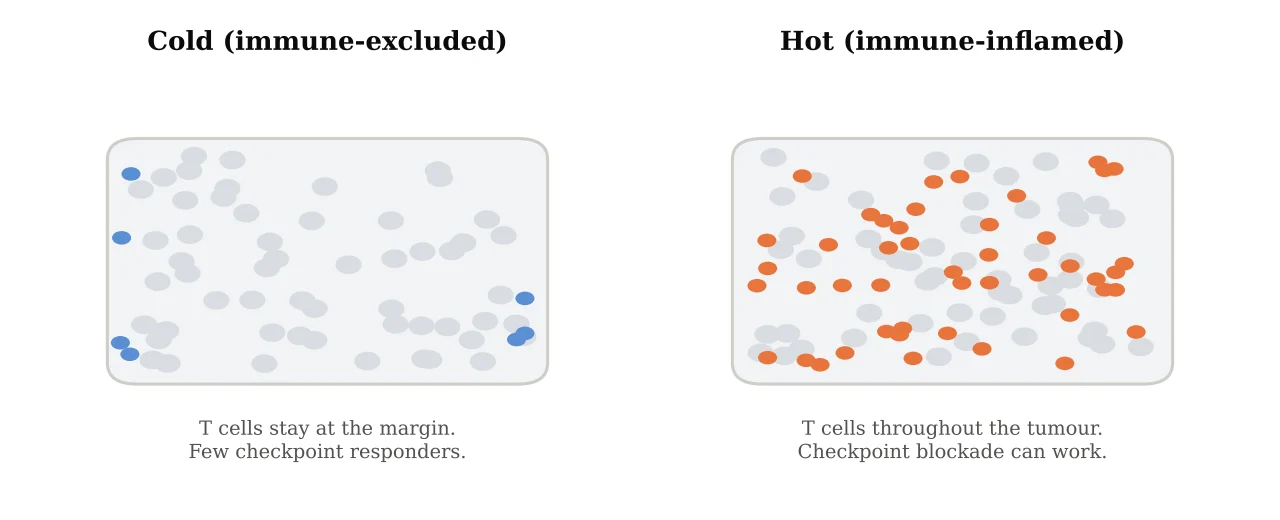
The distinction turns on whether tumor-infiltrating lymphocytes are present, and on the cytokine environment around them. Hot tumors carry molecular signatures of immune activation; cold tumors do not, and they are the ones that fail to benefit from checkpoint blockade.
| Cold tumor | Hot tumor | |
| T-cell infiltration | Absent, or confined to the invasive margin | Distributed through the tumor bed |
| Antigen presentation | Poor; dendritic cells not activated | Active cross-priming of CD8 T cells |
| Cytokine environment | Immunosuppressive; regulatory T cells and myeloid suppressor cells dominate | Pro-inflammatory; type I interferon present |
| Response to anti-PD-1 | Low | Substantially higher |
| Typical examples | Pancreatic, prostate, many ovarian and glioma tumors | Melanoma, MSI-high colorectal, some NSCLC |
The therapeutic question follows directly: can a cold tumor be converted, rather than simply excluded from immunotherapy? Oncolytic virotherapy is the most direct attempt at that conversion, and the mechanism is well characterized [4, 5, 6, 7].
Mechanism: how a virus turns a tumor hot
What the virus does the cell
Before any immunology happens, the virus has to get in, copy itself and burst the cell. Each round of that cycle produces hundreds of new virions, so the dose amplifies inside the tumor rather than decaying the way a drug does.
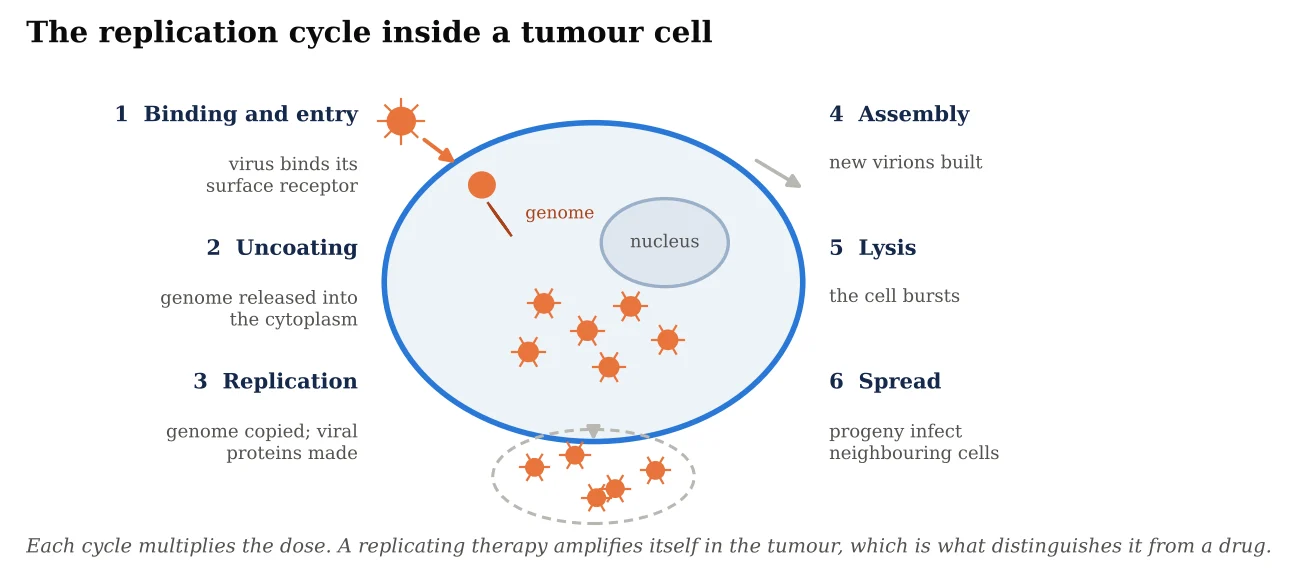
The step that makes this a cancer therapy rather than an infection is the first one. A healthy cell detects the virus and shuts replication down through its interferon response. Many tumor cells cannot, because the same pathway defects that help a tumor evade immune control, together with activated Ras signaling and impaired p53, also leave it unable to defend itself against a virus.

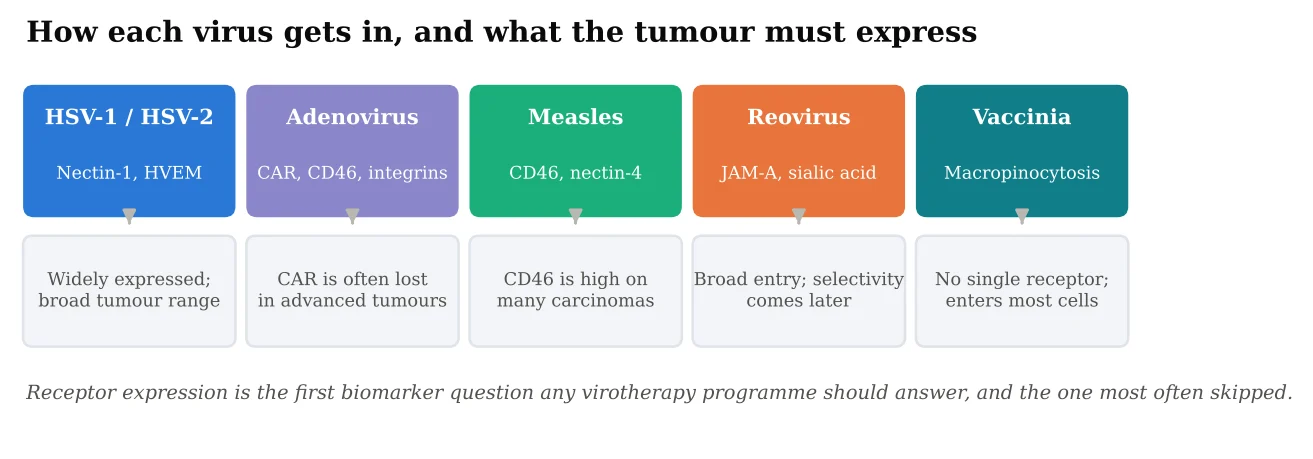
Entry is the other half of selectivity, and it is specific to the backbone. Each virus uses a different receptor, and whether a given tumor expresses it is a question that should be answered in the preclinical package rather than discovered in the clinic.
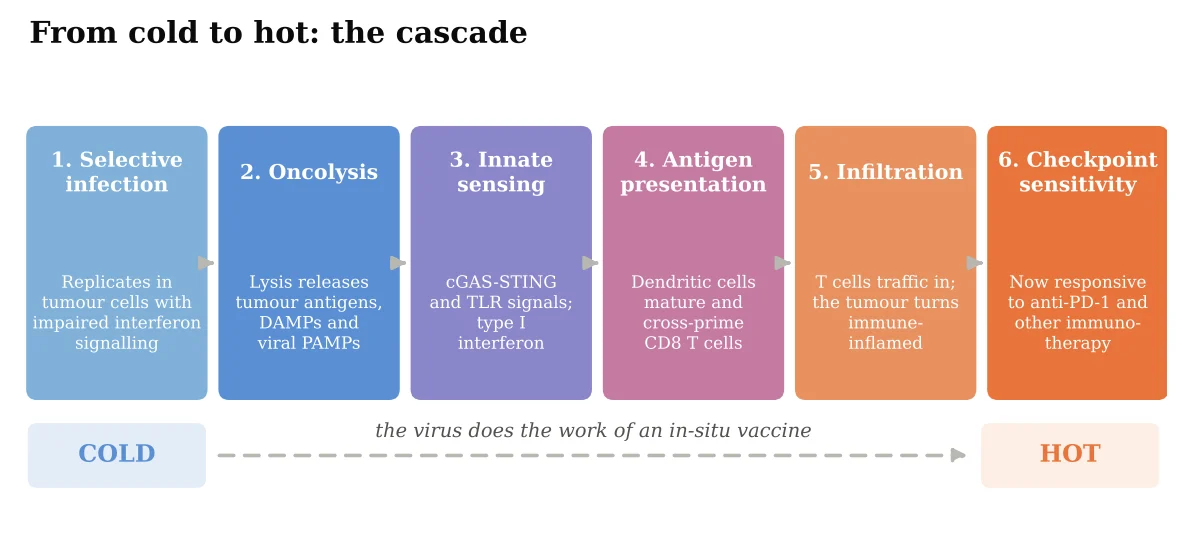
The cold-to-hot cascade
| Step | What happens | Why it matters |
| Selective infection | The virus replicates preferentially in cells with defective antiviral signaling, activated Ras or impaired p53. T-VEC achieves this partly by deleting the gamma-34.5 gene, which lets it evade the antiviral response of normal cells [7] | Tumor selectivity without a targeting antibody; the tumor’s own defects are the address |
| Oncolysis | Lysis releases tumor-associated antigens, neoantigens, damage-associated molecular patterns and viral pathogen-associated molecular patterns together [5, 6] | Antigen and adjuvant arrive in the same place at the same time, which is what a vaccine needs |
| Innate sensing | cGAS-STING, TLR and RIG-I signaling drive type I interferon production [4, 6] | Dendritic cells mature; NK cells activate; the local environment flips from suppressive to inflammatory |
| Cross-priming | Dendritic cells present tumor antigens and prime CD8 T cells [4] | The response becomes antigen-specific and systemic rather than local |
| Infiltration and memory | T cells traffic into the lesion, including uninjected lesions; tertiary lymphoid structures can form | The abscopal effect, and the basis for durable responses |
| Checkpoint sensitization | The now-inflamed tumor becomes responsive to anti-PD-1 and related agents [6, 7] | The clinical rationale for every major combination trial in the class |
Immunogenic cell death in detail
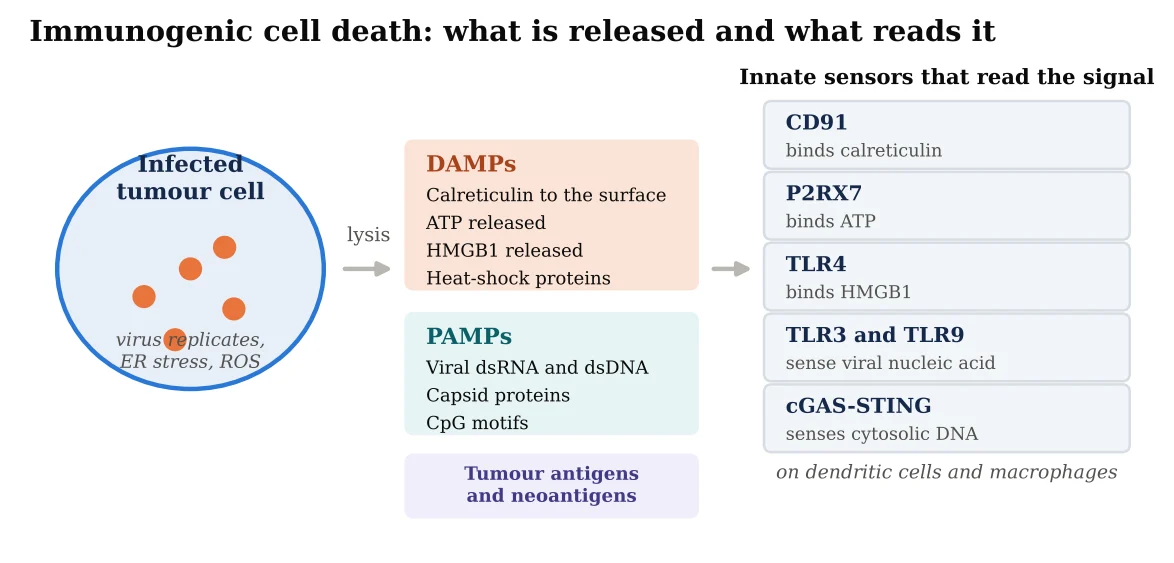
Not all cell death is immunogenic. What makes oncolytic lysis different is the specific set of molecules released, and the fact that innate sensors on dendritic cells and macrophages have dedicated receptors for each of them. Endoplasmic reticulum stress and reactive oxygen species overload after infection drive the process [7].
| Signal | Role |
| Calreticulin on the cell surface | An eat-me signal; binds CD91 on dendritic cells and drives phagocytosis of the dying tumor cell |
| ATP released to the extracellular space | Binds P2RX7; acts as a find-me signal recruiting dendritic cells and monocytes, and drives inflammasome activation |
| HMGB1 released from the nucleus | Binds TLR4; promotes antigen processing and presentation |
| Heat-shock proteins | Chaperone tumor peptides and improve cross-presentation |
| Viral nucleic acid | Sensed by TLR3, TLR9, RIG-I and cGAS-STING, producing the type I interferon response that matures dendritic cells [4, 6] |
The in-situ vaccine framing
An oncolytic virus does not need to know which antigens matter. It releases the patient’s own tumor antigens alongside the danger signals needed to present them, so the vaccine is assembled in the patient rather than manufactured in advance. That is the field’s structural advantage over neoantigen vaccines, and the reason heterogeneous tumors are a plausible target.
What the tumor microenvironment looks like before and after
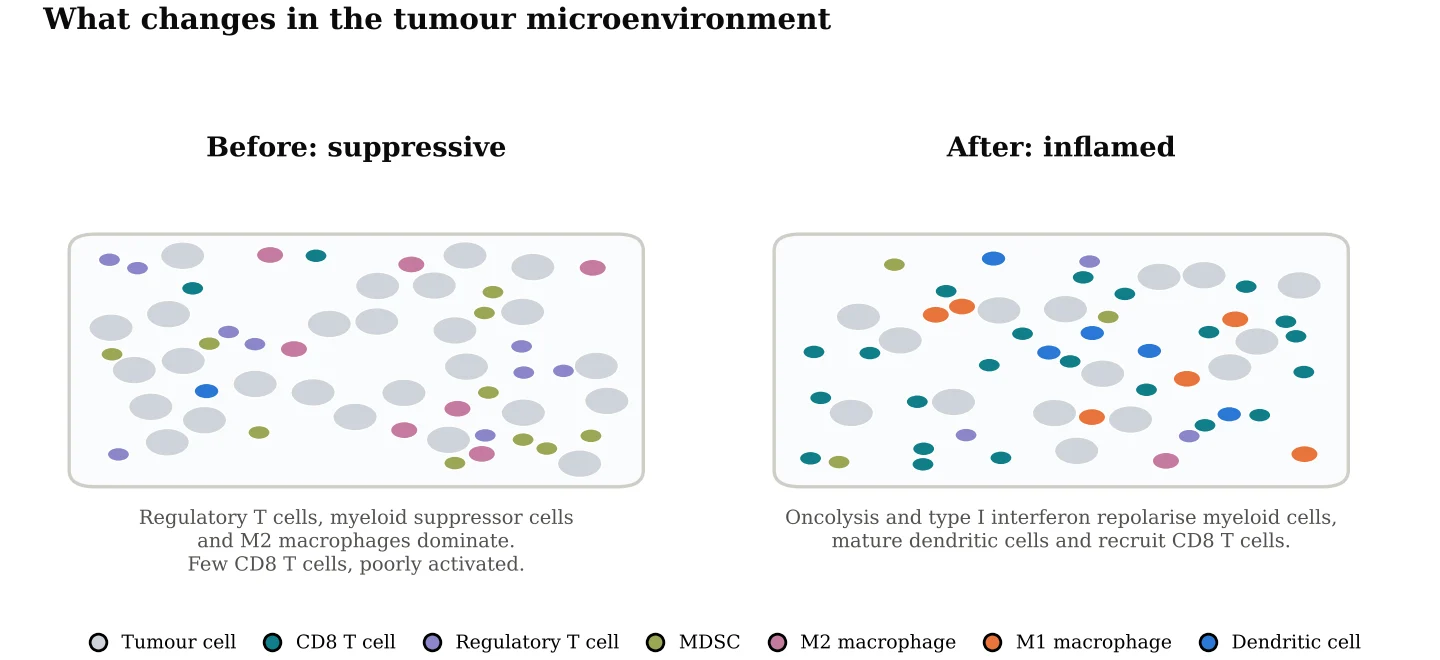
The cascade is easiest to read as a change in cell populations. A cold tumor is crowded with regulatory T cells, myeloid-derived suppressor cells and M2 macrophages, with few and poorly activated CD8 T cells. After successful virotherapy the myeloid compartment repolarizes, dendritic cells mature, and effector T cells arrive in numbers.
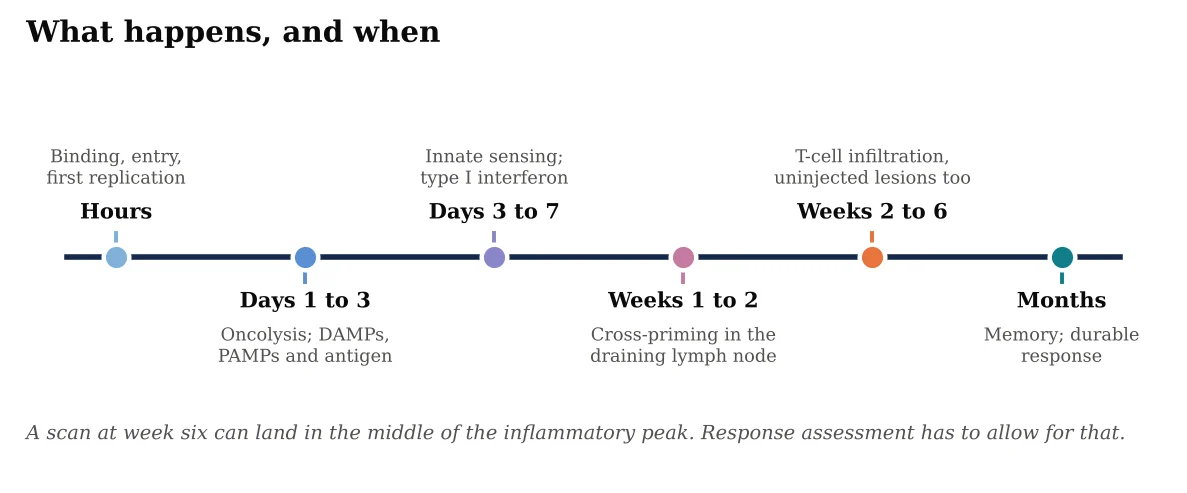
That shift does not happen all at once, and the timing matters for when scans and biopsies are scheduled.
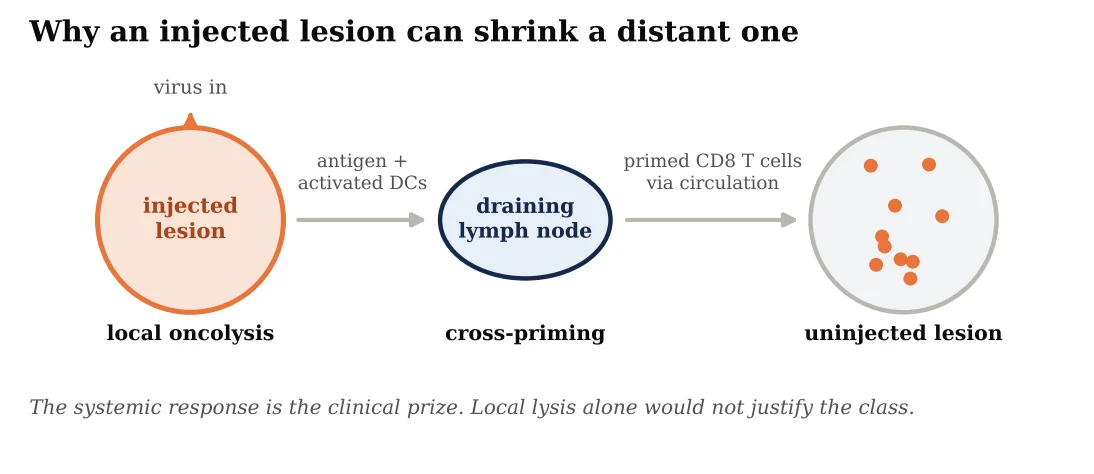
Why a local injection can shrink a distant lesion
The abscopal effect is the clinical justification for the whole class. If the benefit were confined to the injected lesion, an oncolytic virus would be a local ablative therapy competing with cryotherapy and radiation. The priming step in the draining lymph node is what makes it a systemic immunotherapy.
Virus platforms and routes of administration
Choosing a backbone
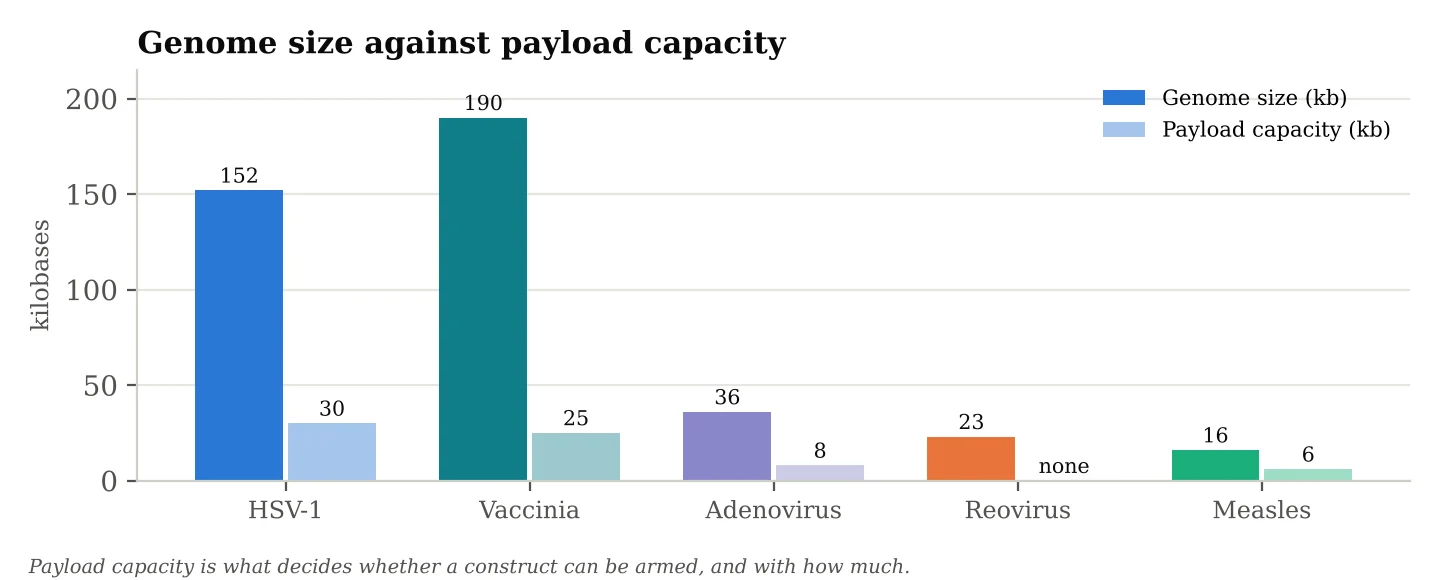
The backbone decision is made early and is hard to reverse. It sets how much payload the construct can carry, how it will be manufactured, whether pre-existing immunity is a problem, and which routes are realistic.
Route of administration
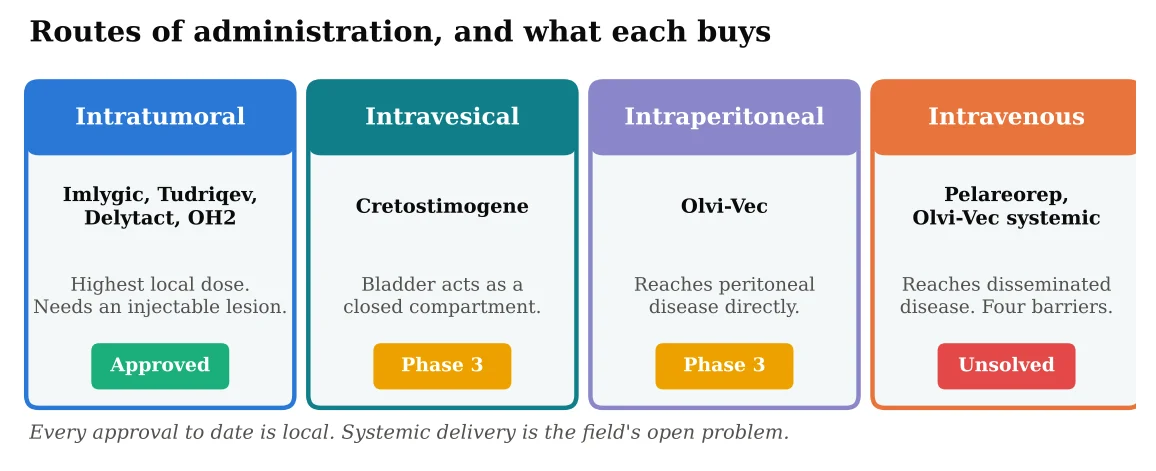
The pattern in Figure 11 is the single most useful orientation for anyone entering this field. Every approval to date delivers the virus into a confined space: a lesion, a bladder, a peritoneal cavity. Intravenous delivery is where the largest patient populations are, and it is the route that has not yet produced an approval.
Approved oncolytic viruses
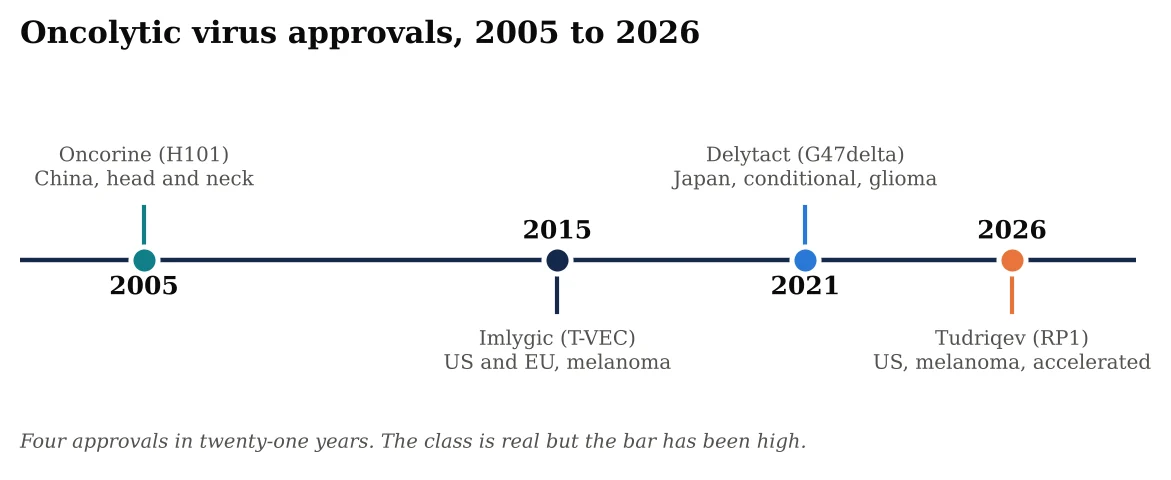
| Product | Virus and route | Indication | Status |
| Oncorine (H101) | Adenovirus, intratumoral | Head and neck carcinoma, with chemotherapy | Approved in China, 2005. The first oncolytic virus approved anywhere |
| Imlygic (talimogene laherparepvec, T-VEC) | HSV-1 encoding GM-CSF, intratumoral | Unresectable melanoma | US and EU, 2015. Reported ORR about 25 percent, CR about 10 percent [4] |
| Delytact (teserpaturev, G47delta) | Third-generation HSV-1, triple-mutated, intratumoral | Malignant glioma | Japan, conditional approval 2021. The first third-generation oncolytic HSV-1 in humans |
| Tudriqev (vusolimogene oderparepvec, RP1) | HSV-1, intratumoral, with nivolumab | Unresectable advanced cutaneous melanoma after anti-PD-1 | US accelerated approval, 6 August 2026 [1, 3] |
Two observations follow from this table. First, every approval to date uses local administration. Second, the two most recent approvals are for viruses engineered to do immunological work, not merely to lyse: T-VEC carries GM-CSF, and RP1 was designed to be more potent than T-VEC and is approved in combination with a checkpoint inhibitor [1, 3].
The RP1 story and what it taught the field
RP1 is worth examining in detail, because its regulatory history is the most informative document the class has produced.
| Date | Event |
| November 2024 | Breakthrough therapy designation granted; BLA submitted under the accelerated approval pathway [3] |
| July 2025 | First complete response letter. FDA held that IGNYTE was not an adequate and well-controlled investigation, questioned the heterogeneity of the enrolled population, and said RP1’s individual contribution could not be isolated from nivolumab’s [1] |
| April 2026 | Second complete response letter, reiterating the same concerns. FDA wrote that the reported response rate and duration of response could not be reliably assessed, could be artifactually increased, and might not be reproducible [1, 2] |
| 30 July 2026 | Cell and Gene Therapy advisory committee votes 10-3 in favor [1] |
| 6 August 2026 | Accelerated approval granted for RP1 plus nivolumab in anti-PD-1-refractory advanced melanoma, with IGNYTE-3 (NCT06264180) already underway as the confirmatory trial [1, 3] |
The lessons
| Lesson | What it means for a program being designed now |
| Contribution of effect is the question | If the virus is given with a checkpoint inhibitor, the trial must be able to answer what the virus added. A single-arm combination study cannot, however strong the response rate looks |
| Randomize earlier than feels necessary | The cost of a randomized Phase 2 is far below the cost of two complete response letters and two years |
| Population heterogeneity is a reviewable defect | Enrolment criteria that mix prior-therapy histories invite the argument that the response rate is artifactual |
| The confirmatory trial should be running at submission | IGNYTE-3 being underway was part of what made accelerated approval tenable |
| Clinical community support matters but does not substitute | The advisory committee shifted the outcome; the underlying design concern was never withdrawn |
Late-stage clinical programs
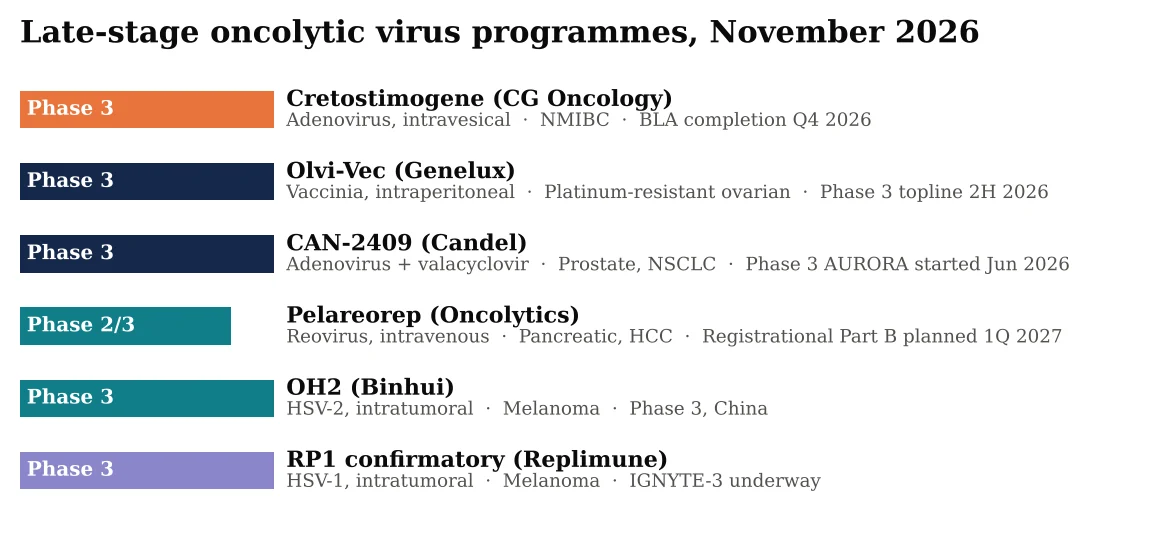
| Program | Detail |
| Cretostimogene grenadenorepvec, CG Oncology | Intravesical oncolytic adenovirus for non-muscle-invasive bladder cancer. Phase 3 BOND-003 Cohort C reported a 75.5 percent anytime complete response rate in high-grade BCG-unresponsive disease, with 41.8 percent at 24 months and median ongoing duration of response of 27.9 months. Fast track and breakthrough therapy designations; BLA completion for BCG-unresponsive NMIBC anticipated Q4 2026. PIVOT-006 in intermediate-risk disease read out in November 2026 [8, 9, 10] |
| Olvi-Vec, Genelux | Oncolytic vaccinia given intraperitoneally. Phase 3 OnPrime / GOG-3076 (NCT05281471) in platinum-resistant or refractory ovarian cancer, with topline data expected in the second half of 2026. Systemic administration programs in small-cell and non-small-cell lung cancer are in dose finding. A June 2026 translational publication supported tumor-microenvironment modulation and reversal of platinum resistance [13, 14] |
| CAN-2409, Candel Therapeutics | Aglatimagene besadenovec, an adenoviral HSV thymidine kinase construct given with valacyclovir. Phase 3 in prostate cancer, with RMAT designation for newly diagnosed localized intermediate-to-high-risk disease, and the global pivotal Phase 3 AURORA trial (NCT07660094) started in June 2026 in metastatic non-squamous NSCLC after progression on pembrolizumab and platinum chemotherapy [15, 16] |
| Pelareorep, Oncolytics Biotech | Intravenous reovirus. FDA-cleared pivotal design in first-line advanced pancreatic ductal adenocarcinoma with gemcitabine and nab-paclitaxel, with potential accelerated registration on an interim analysis. A Type D meeting on adding a randomized Part B to REO 033 was planned, with Part B enrolment targeted for the first quarter of 2027 [17, 18] |
| OH2, Binhui Biopharmaceutical | Oncolytic HSV-2, Phase 3 in melanoma in China [19] |
| IGNYTE-3, Replimune | The randomized confirmatory trial supporting RP1’s accelerated approval [1] |
Combinations, sequencing and response assessment
Combination partners
An oncolytic virus is rarely the whole treatment. It is a priming agent, and the question is what it primes for.
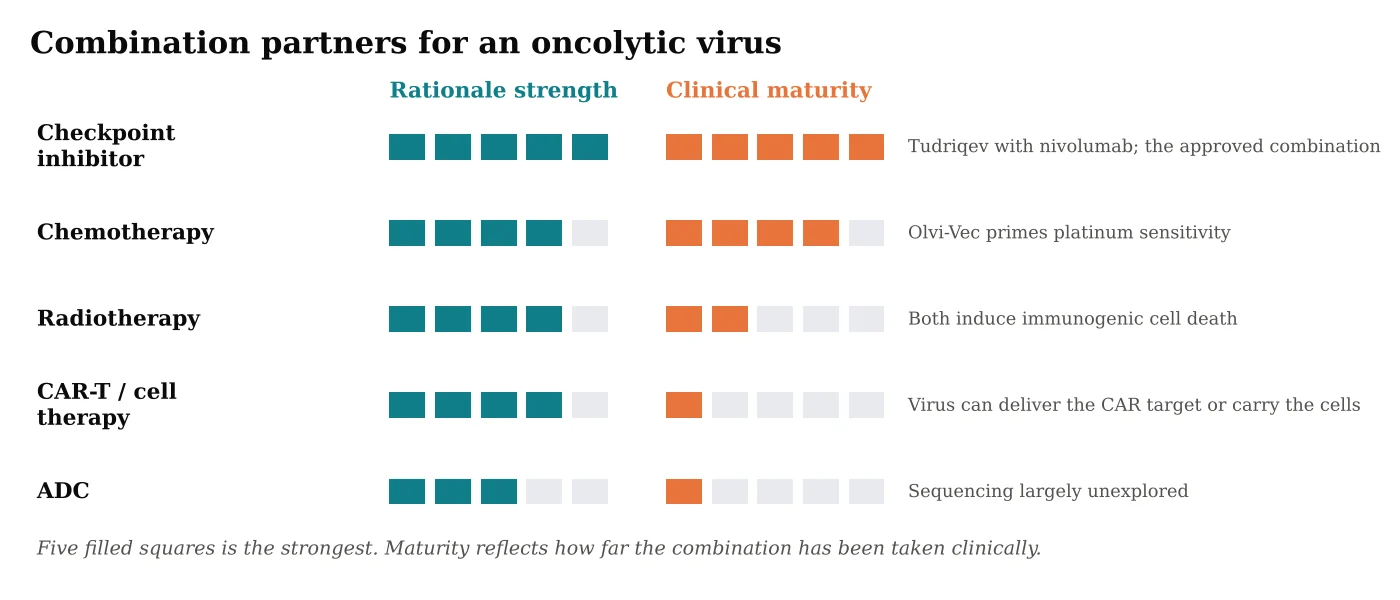
| Partner | Rationale | Where it stands |
| Checkpoint inhibitor | The virus supplies the T-cell infiltration that checkpoint blockade needs; the inhibitor prevents the primed response from being shut down | Tudriqev plus nivolumab is the approved combination, and the model for the class [1, 3] |
| Chemotherapy | Several cytotoxics induce immunogenic cell death themselves; the virus can also restore sensitivity to a drug the tumor has escaped | Olvi-Vec is being tested on exactly this hypothesis in platinum-resistant ovarian cancer; pelareorep is paired with gemcitabine and nab-paclitaxel [14, 17] |
| Radiotherapy | Both induce immunogenic cell death, and radiation can increase viral uptake | Mechanistically compelling, clinically early |
| CAR-T and cell therapy | The virus can deliver the CAR target antigen into a heterogeneous tumor, or the cells can carry the virus past neutralizing antibodies [12, 21] | Preclinical and early translational, and one of the most interesting areas in the field |
| Antibody-drug conjugates | Priming an inflamed microenvironment may improve ADC activity, and payload-induced cell death may be immunogenic | Largely unexplored; sequencing is the open question |
Response assessment
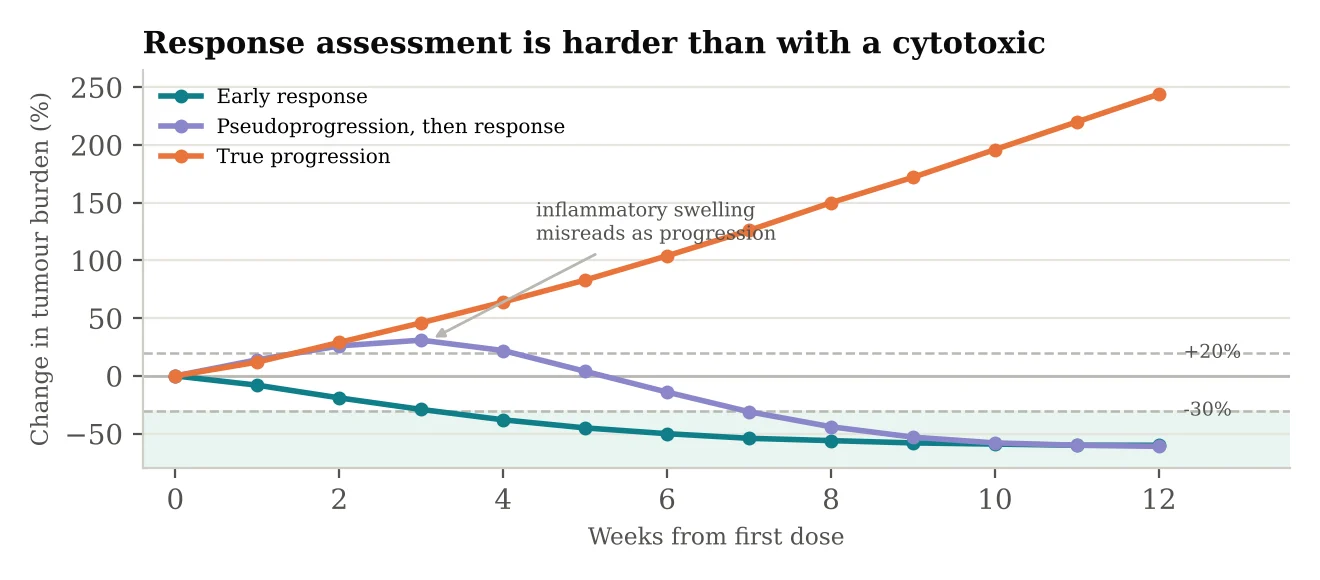
An oncolytic virus causes inflammation. Inflammation makes lesions larger before the immune response makes them smaller, and conventional response criteria read that enlargement as progression. Patients can be taken off a working therapy as a result, and trials can under-report response.
| Issue | How to handle it in a protocol |
| Pseudoprogression | Use immune-adapted response criteria, and require confirmation of progression at a later scan before discontinuation |
| Injected against uninjected lesions | Track them separately. The abscopal signal lives in the uninjected lesions, and pooling the two hides it |
| Timing of first assessment | A scan at week six or eight on a conventional schedule can land in the middle of the inflammatory peak |
| Biopsy-based endpoints | Paired pre-treatment and on-treatment biopsies showing T-cell infiltration are the direct evidence that the mechanism worked, and are worth the operational cost |
Where the virus sits in the pathway
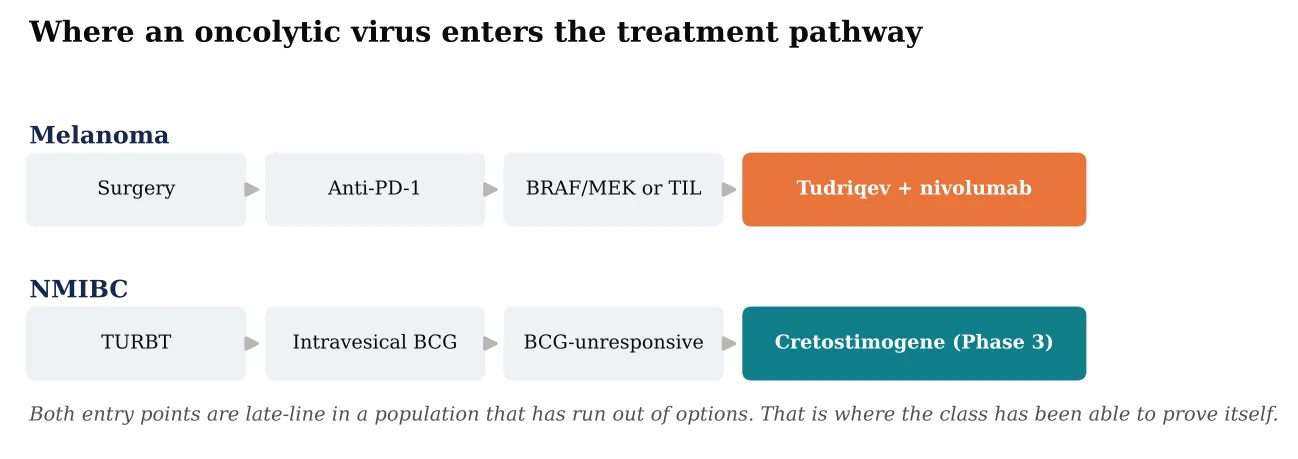
Both current entry points are late-line, in populations that have exhausted standard options. That is where single-arm evidence was acceptable and where the unmet need carried the approval. Moving earlier, into adjuvant or first-line settings, means randomized comparison against an active standard, which is a different and far larger undertaking.
Future research directions
Systemic delivery
Every approved product is delivered locally. Intravenous delivery would open disseminated disease, and it is blocked by four physiological barriers: pre-existing neutralizing antibodies, hepatic and reticuloendothelial sequestration, poor penetration through tumor stroma, and the antiviral interferon response [12, 20].

Cell-carrier delivery is the most advanced of these approaches. A carrier cell loaded with virus can shield it from antibodies in transit, home toward tumor-associated signals, support viral replication and release the payload in the tumor. Mesenchymal stromal cells, NK cells, peripheral blood mononuclear cells and CAR-T cells have all been used as carriers, and CAR-T carriers additionally couple viral delivery to adaptive-cell trafficking [12, 20, 21].
Arming the construct
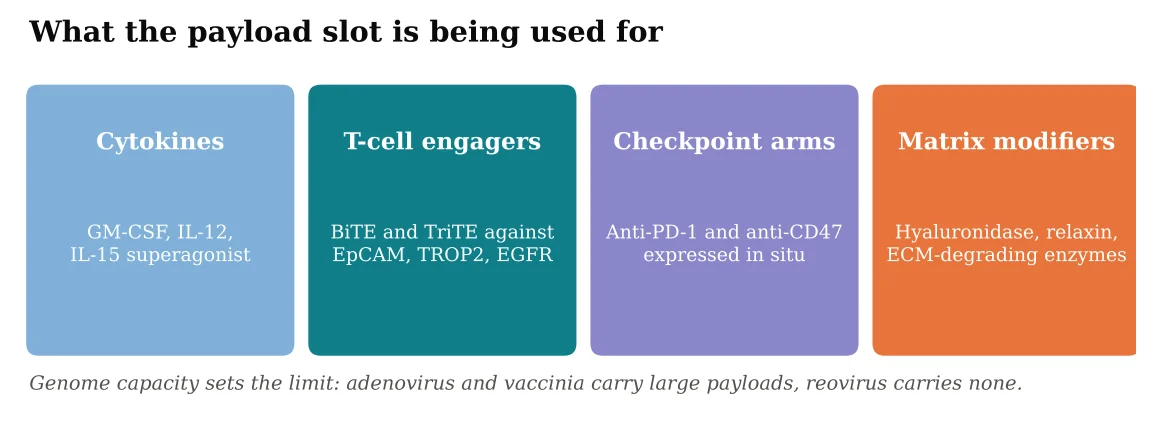
Genome capacity sets what is possible, as Figure 10 showed. Within that constraint, four payload classes dominate current work: cytokines including GM-CSF, IL-12 and IL-15 superagonists; bispecific and trispecific T-cell engagers against EpCAM, TROP2, EGFR and c-MET; checkpoint and anti-CD47 antibodies expressed in situ; and matrix-degrading enzymes to improve penetration [11, 12, 21, 22].
T-cell-engager-armed viruses are the most strategically interesting of these, because they address a real limitation of systemic T-cell engagers, whose use is constrained by short half-life, continuous-infusion requirements and cytokine-mediated toxicity. Expressing the engager locally from a replicating virus concentrates it where the tumor is [11, 22].
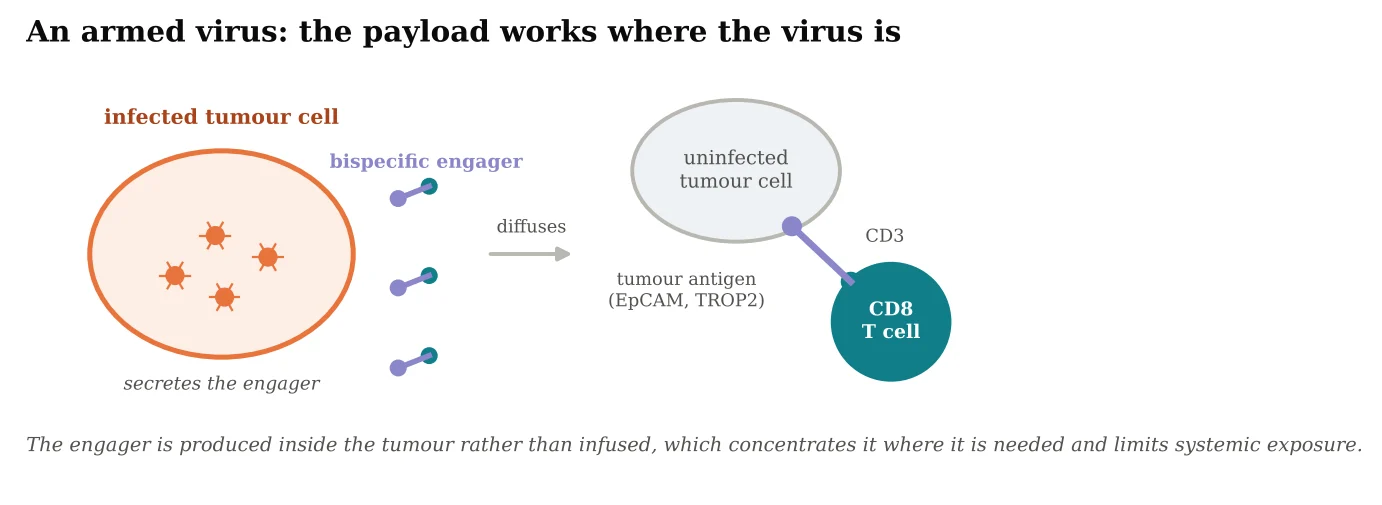
The second-order benefit is reach. The virus does not have to infect every tumor cell for the payload to act on them, because a secreted engager diffuses to neighbors the virus never entered. That partially decouples efficacy from infection efficiency, which has always been virotherapy’s weakest link.
The design agenda
| Direction | What is being worked on |
| Engineered tropism | Receptor retargeting and transcriptional control so replication is restricted to the intended tumor |
| Controllable expression | Inducible and dose-tuned transgene expression, so a payload can be turned down if toxicity appears |
| Dual and multi-targeting | Trispecific engagers encoded in one vector to address antigen heterogeneity within a tumor [22] |
| Combination sequencing | Whether the virus primes before, with, or after checkpoint blockade, chemotherapy, ADCs or radiotherapy |
| Biomarkers | Which patients have the viral entry receptor, the interferon defect, and the T-cell repertoire for this to work. Largely unsolved, and the field’s biggest evidentiary gap |
| Potency and CMC | Defining potency for a replicating, immunologically active product, and for a combined cell-and-virus product where two components each need a specification |
EllyCell’s oncolytic virus capability
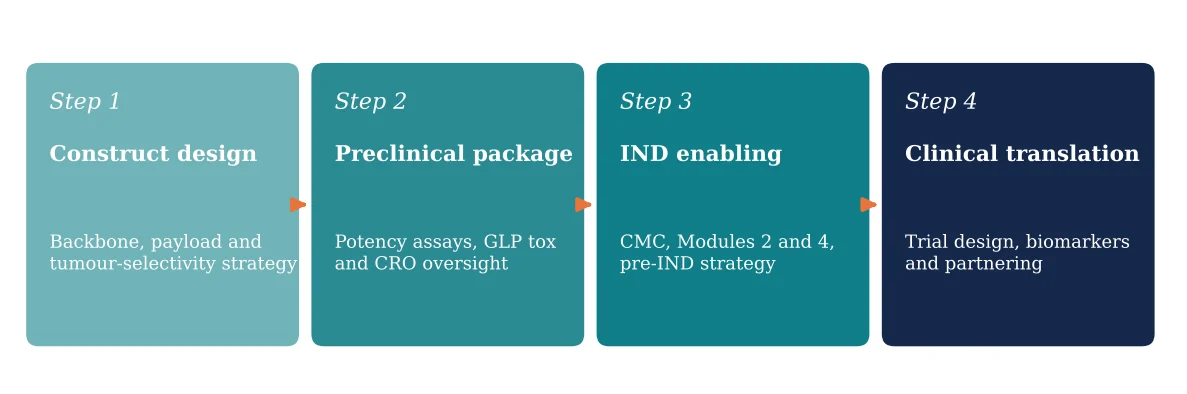
EllyCell brings senior oncolytic virus expertise to clients as a contracted resource, onsite or virtual, from construct design through IND and into clinical translation.
Dr. Duong H. Nguyen, Senior Director, Translational Research
Dr. Nguyen spent a decade leading translational research and innovation in oncolytic virotherapy, most recently as Senior Director, Translational Research and Innovation at Calidi Biotherapeutics through November 2026.
His work spans oncolytic vaccinia design, cell-carrier delivery systems, gene-encoded T-cell engagers against TROP2 and EpCAM, and IL-15 superagonist constructs, together with the development path those constructs have to survive: IND-enabling studies, GLP toxicology and CRO oversight, IND Modules 2 and 4, and assay qualification.
That combination is unusual. Construct design and regulatory execution are normally separate people, and programs lose time at the seam between them.
Around Dr. Nguyen, EllyCell assembles the rest of the team the program needs, including former FDA preclinical review expertise through David Hawver, who spent more than 22 years at the Agency and handled over 500 IND cases. For a virotherapy sponsor heading into a pre-IND meeting, having the construct designer and a former reviewer in the same room is the point.
| Service | What you get |
| Construct design review | Backbone selection, payload strategy, tumor-selectivity mechanism and genome-capacity trade-offs, assessed against what the clinical hypothesis actually requires |
| Delivery strategy | Local against systemic, and where systemic is the goal, an honest assessment of carrier-cell and shielding approaches and what each costs in CMC complexity |
| Preclinical package design | Potency and bioactivity assays, biodistribution and shedding studies, GLP toxicology design and CRO selection and oversight |
| IND enabling and submission | CMC strategy for a replicating biologic, Modules 2 and 4 authoring, pre-IND briefing packages and meeting preparation |
| Clinical trial design | Trial designs that can answer the contribution-of-effect question before a reviewer asks it, with immune-adapted response criteria and translational plans built in |
| Partnering and licensing | Competitive positioning against the late-stage set, partner mapping and diligence support on either side of a transaction |
Start a conversation
Whether you are designing a construct, preparing an IND, or deciding how to position a virotherapy asset for partnering, we can put the right expertise on it.
EllyCell, LLC, McLean, Virginia, USA https://ellycell.com, info@ellycell.com
References
[1] Targeted Oncology, “FDA grants accelerated approval to RP1 plus nivolumab in advanced melanoma,” August 2026.
[2] Oncology News Central, “FDA rejects oncolytic virus combination for advanced melanoma a second time,” 13 April 2026.
[3] Drugs.com, Tudriqev (vusolimogene oderparepvec-wtpg) regulatory record, 2024 to 2026.
[4] Journal of Cancer, “From immunosuppression to immunomodulation: turning cold tumours into hot,” doi 10.7150/jca.71992.
[5] Clinical and Experimental Medicine, “Oncolytic virotherapy and tumor microenvironment modulation,” 2025.
[6] “Oncolytic virotherapy for cancer: biological mechanisms, clinical advances, and future perspectives,” 2026.
[7] “Oncolytic virus and immunogenic cell death in cancer therapy,” review.
[8] Urology Times, “BOND-003: cretostimogene yields durable 24-month responses in high-grade NMIBC,” December 2025.
[9] CancerNetwork, final Phase 3 BOND-003 Cohort C results, July 2026.
[10] CG Oncology, third quarter 2026 financial results and business update, November 2026.
[11] Frontiers in Immunology, oncolytic virus platforms and combination immunotherapy, 2026.
[12] “The synthetic biology frontier: engineered oncolytic viruses and viral vectors for next-generation cancer therapy and gene delivery,” 2026.
[13] Genelux Corporation, second quarter 2026 financial results and business updates, 13 August 2026.
[14] Genelux Corporation, translational analysis supporting immune activation and chemotherapy sensitisation with Olvi-Vec in ovarian cancer, 30 June 2026.
[15] DelveInsight, oncolytic virus therapy market and pipeline reports, 2026.
[16] Candel Therapeutics, CAN-2409 programme updates; AURORA trial NCT07660094.
[17] Rare Cancer News, Oncolytics Biotech FDA clearance for a pivotal Phase 3 of pelareorep in pancreatic cancer.
[18] Oncolytics Biotech, REO 033 programme update, 13 July 2026.
[19] DelveInsight, oncolytic virus clinical trial landscape, 2026.
[20] Translational Lung Cancer Research, “Next-generation oncolytic virotherapy for lung cancer,” 2026.
[21] Cancer Biology and Medicine, “Improving systemic delivery of oncolytic virus by cellular carriers.”
[22] “Oncolytic adenoviruses encoding bispecific T cell engagers or a novel trispecific T cell engager for dual-targeting of c-MET and EGFR,” 2026.