03 · Licensing
PD-1 x VEGF Bispecifics
Clinical outcomes, asset comparison, and how to pick the right one to license
On 15 November 2026 the FDA issued a complete response letter for the first PD-1 x VEGF bispecific ever filed in the United States. The same molecule holds three approvals in China and has beaten pembrolizumab on overall survival. Both facts are true, and together they define what a buyer is actually underwriting in this class.
EllyCell, LLC
Biopharmaceutical Consulting, R&D, Licensing and Business Development
McLean, Virginia, USA
Email: info@ellycell.com
Website: https://ellycell.com/
Executive summary
PD-1 x VEGF bispecifics are the most heavily transacted class in oncology. More than fifteen billion dollars of headline deal value has moved in four years, almost all of it for assets originated in China. The clinical case is real: ivonescimab is the first molecule to beat pembrolizumab on overall survival in a randomized Phase 3, and the first to beat an anti-PD-1 plus chemotherapy on overall survival in NSCLC.
The regulatory case is not settled. On 15 November 2026 the FDA issued a complete response letter for ivonescimab in EGFR-mutated NSCLC after prior TKI therapy, holding that a progression-free survival benefit without a statistically significant overall survival benefit does not establish substantial evidence of effectiveness [1, 2]. For anyone licensing in this class, that letter is the most important document published this year.
0.73
OS hazard ratio for ivonescimab against pembrolizumab, HARMONi-2 [3]
0.66
OS hazard ratio against tislelizumab plus chemotherapy, HARMONi-6 [4]
3
NMPA approvals in China; none yet in the United States [5, 6]
$15B+
headline deal value transacted in the class since 2022 [7, 8]
Key messages
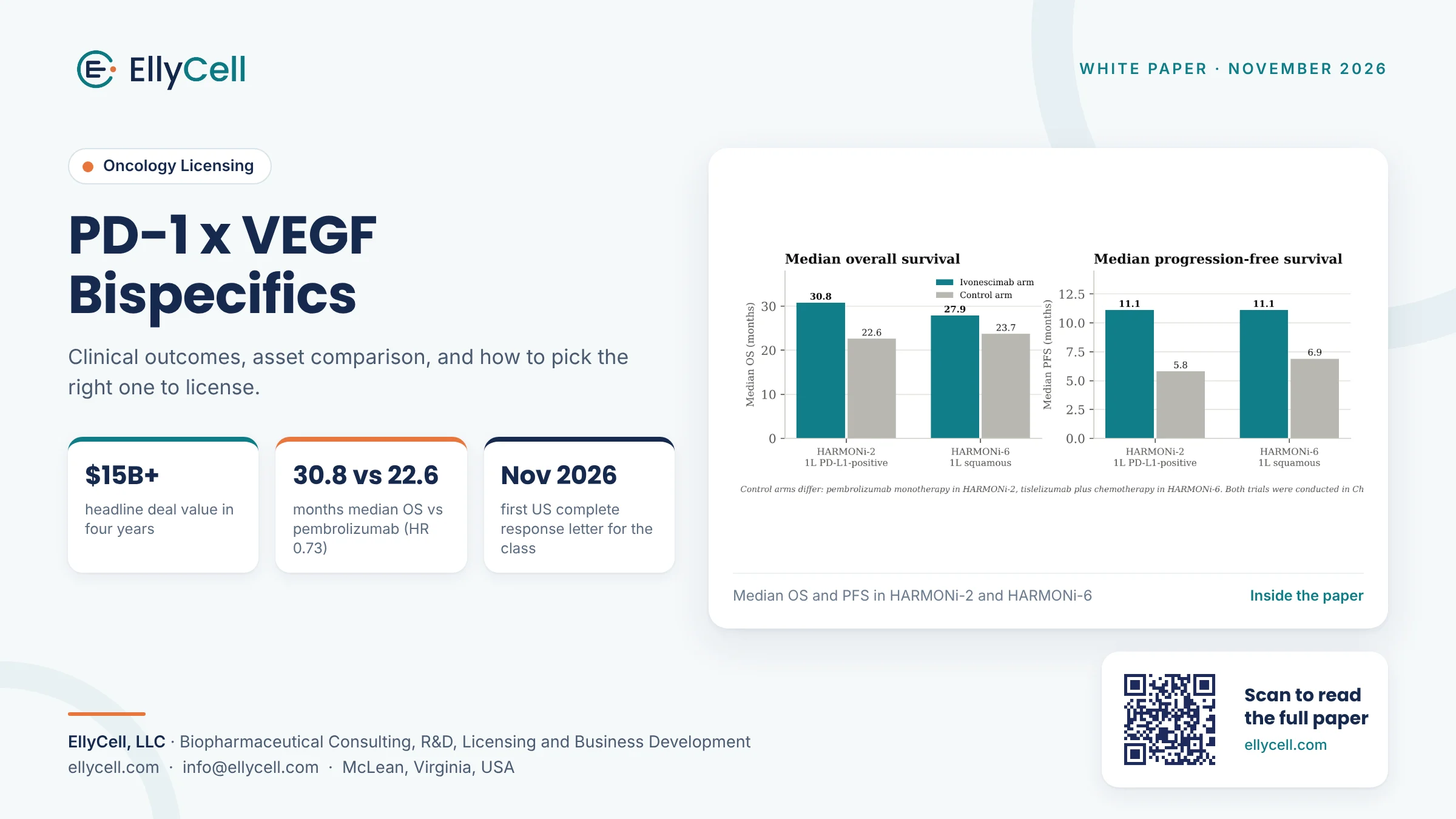
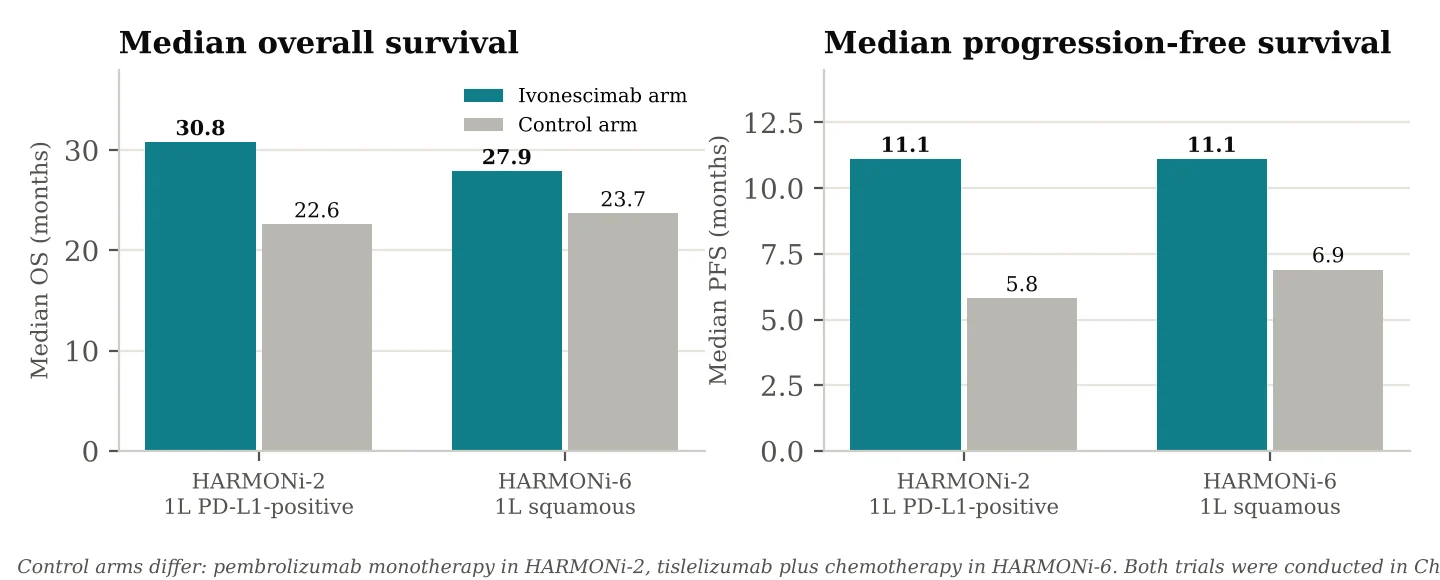
The biology has cleared its bar. HARMONi-2 showed median overall survival of 30.8 months against 22.6 for pembrolizumab, and HARMONi-6 showed 27.9 against 23.7 months for tislelizumab plus chemotherapy [3, 4, 9].
The regulatory bar is overall survival, not PFS. The FDA was explicit: a PFS benefit without a statistically significant OS benefit does not support a positive benefit-risk profile [1, 2].
China-generated data alone is not the problem; the endpoint is. HARMONi was a multiregional trial, and the updated analysis showed consistency between Western and Asian patients. It still did not clear statistical significance on OS [10, 11].
Diligence has to price the evidence standard, not the molecule. Every asset in the class now files against the standard set in November 2026, and the readouts that will test it arrive between 2027 and 2029.
The class and its thesis
A PD-1 x VEGF bispecific puts checkpoint blockade and anti-angiogenesis into one molecule. The argument is not convenience. It is that physically linking the two arms produces something co-administration of two separate drugs does not.
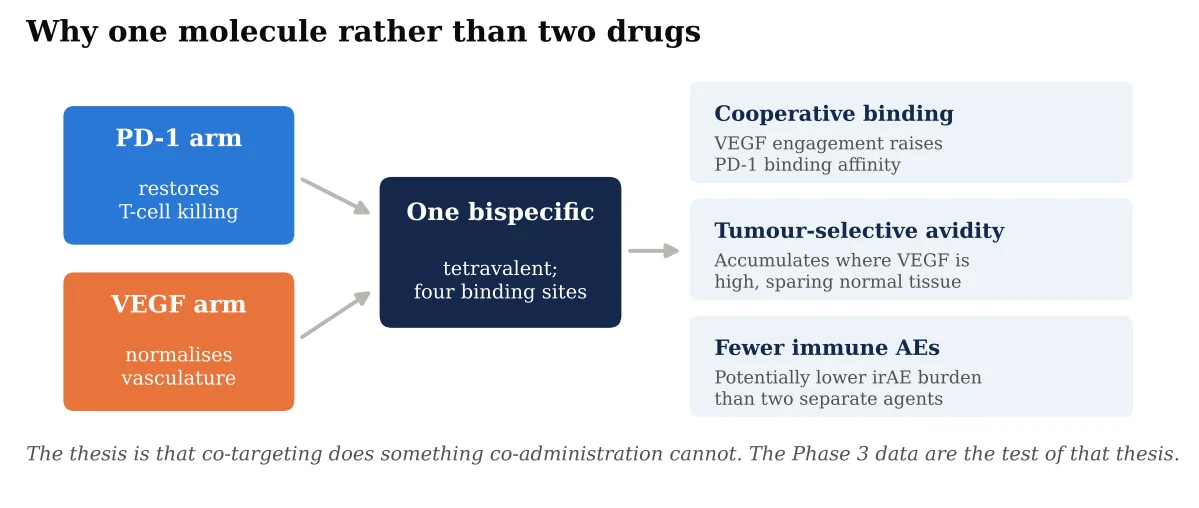
Preclinical work suggests cooperative binding, in which engagement of one arm raises the affinity of the other, and that bispecific co-targeting may confer a safety advantage through reduced immune-related adverse events relative to two separate agents [12]. Summit attributes ivonescimab’s behavior to a tetravalent structure with four binding sites, giving higher avidity and accumulation in tumor tissue where VEGF is abundant [5].
| Design axis | What differs across the class | Why it matters to a buyer |
| PD-1 or PD-L1 arm | Ivonescimab, SSGJ-707 and RC148 target PD-1; pumitamig, HB0025 and IMM2510 target PD-L1 [13, 14] | Different expression biology, different biomarker strategy, and a different competitive set |
| Valency and format | Tetravalent bispecific antibodies dominate; HB0025 and IMM2510 are fusion proteins with a VEGF receptor trap [13, 15] | Format drives manufacturability, mispairing risk and the CMC package |
| Isotype | SSGJ-707 is a fully human IgG4 bispecific [13] | Isotype drives effector function and the immunogenicity profile |
| Combination partner | Monotherapy, with chemotherapy, or with an ADC | Determines the comparator, the trial size, and whether contribution of effect becomes a review issue |
The deal landscape
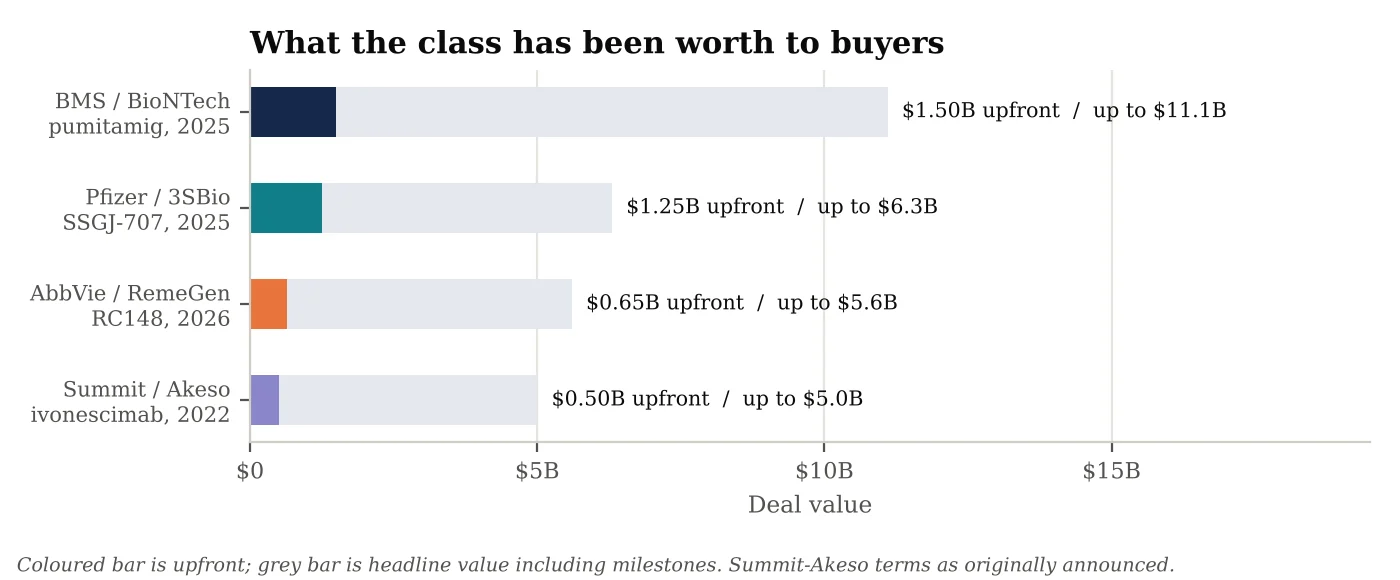
Four transactions define the class, and they have set the price expectation for everything that follows.
| Year | Buyer and originator | Asset | Terms | Territory |
| 2022 | Summit Therapeutics from Akeso | Ivonescimab | $500M upfront, up to $5.0B as originally announced | US, Canada, Europe, Japan and others |
| 2025 | Bristol Myers Squibb with BioNTech | Pumitamig (BNT327) | $1.5B upfront, up to approximately $11.1B [7, 8] | Global co-development |
| 2025 | Pfizer from 3SBio | SSGJ-707 | $1.25B upfront plus $100M equity, up to approximately $6.3B [7, 16] | Global ex-mainland China, with a China option |
| 2026 | AbbVie from RemeGen | RC148 | $650M upfront, up to approximately $5.6B [7, 17] | Ex-Greater China; RemeGen retains Greater China |
BioNTech acquired Biotheus outright to secure BNT327, paying $800M upfront plus milestones and gaining an antibody platform and a Chinese manufacturing site with it [16, 18]. That is a different kind of transaction from an asset license, and it is worth noting as a precedent: for a platform-plus-asset package, buyers have been willing to buy the company.
What the deal comparables actually tell you
These are not prices for clinical certainty. BNT327 and SSGJ-707 commanded their upfronts on Phase 1 and Phase 2 data, before any Phase 3 readout in the class. The deals priced the thesis. The 2027 to 2029 readouts will price the assets.
Ivonescimab: the regulatory record
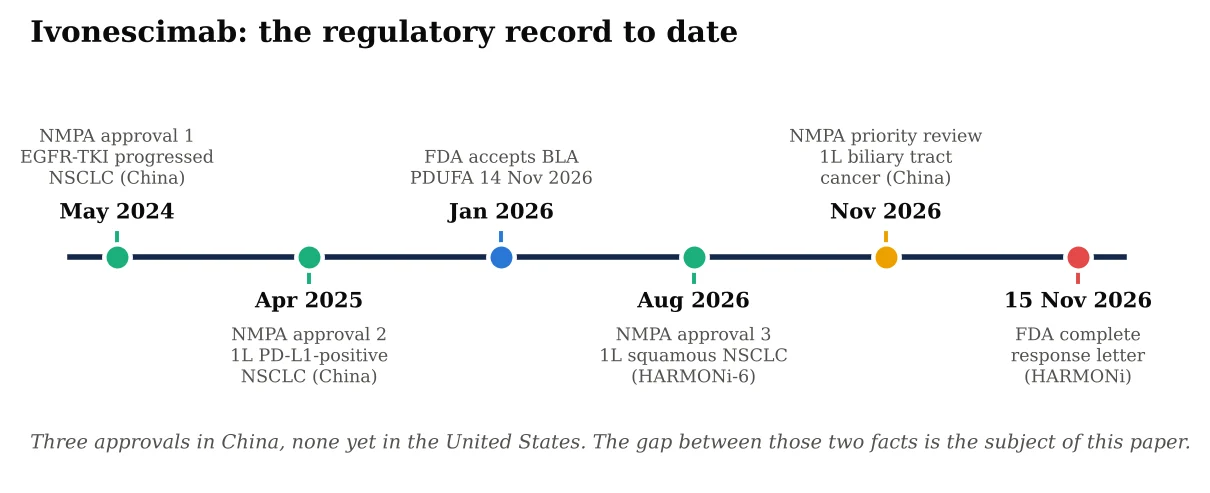
Ivonescimab is the only molecule in the class with approvals anywhere, and the only one to have been through a US review. Its record is therefore the class’s best available map.
| Date | Event |
| May 2024 | First NMPA approval in China, for NSCLC that has progressed on EGFR-TKI therapy [6] |
| April 2025 | Second NMPA approval, for first-line PD-L1-positive NSCLC, based on HARMONi-2 [9] |
| January 2026 | FDA accepts the BLA for ivonescimab plus chemotherapy in EGFR-mutated NSCLC post-TKI, with a PDUFA date of 14 November 2026 [19] |
| May and June 2026 | HARMONi-6 overall survival presented in the ASCO plenary session, the first time a China-originated therapy featured there, and published in The Lancet [4, 20] |
| August 2026 | Third NMPA approval, for first-line squamous NSCLC, based on HARMONi-6 [5, 21] |
| September 2026 | HARMONi-2 overall survival presented at WCLC; HARMONi update presented the same week [3, 10] |
| 4 November 2026 | NMPA grants priority review for first-line biliary tract cancer in China, after a Phase 3 win over durvalumab plus chemotherapy [22] |
| 15 November 2026 | FDA issues a complete response letter on the HARMONi-based BLA [1, 2] |
By the end of 2025 all twelve indications across Akeso’s five self-commercialized drugs had been added to China’s National Reimbursement Drug List, including two NSCLC indications for ivonescimab [21]. Commercially, the asset is established in its home market. The question has always been whether that translates.
Clinical outcomes: what the trials show
HARMONi-2, against pembrolizumab
HARMONi-2 randomized treatment-naive patients with PD-L1-positive advanced NSCLC in China to ivonescimab monotherapy or pembrolizumab monotherapy. It had already met its primary progression-free survival endpoint, with median PFS of 11.1 months against 5.8 months and a hazard ratio of 0.51 [23, 9].
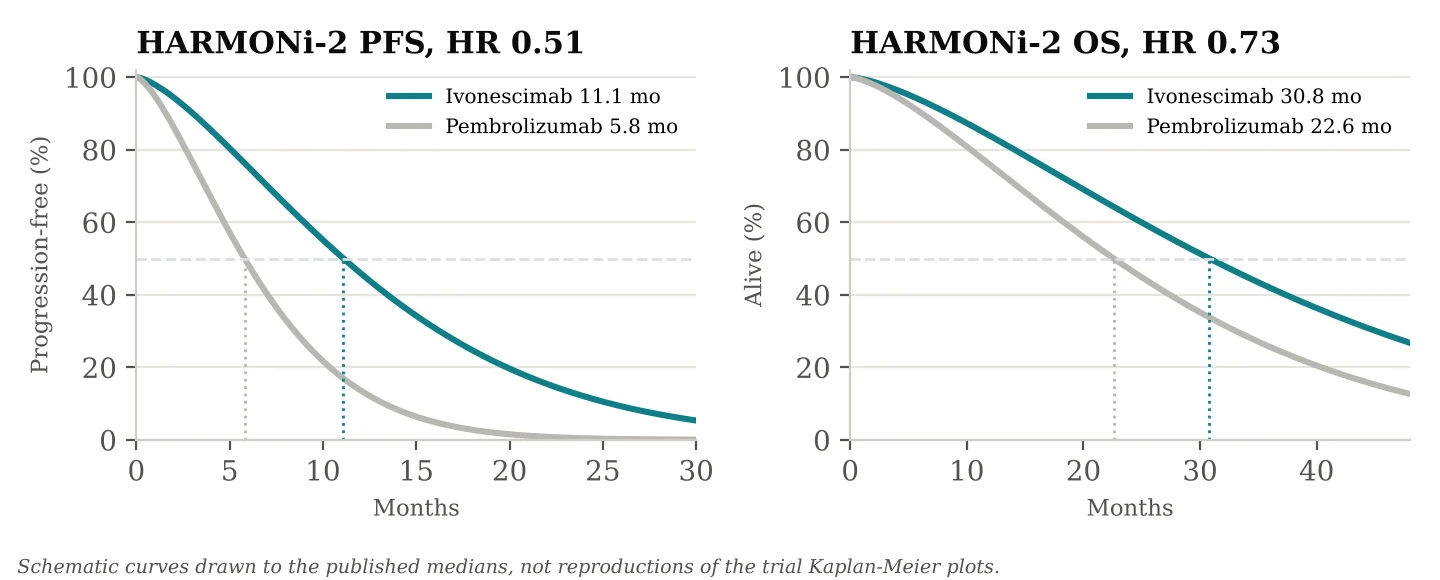
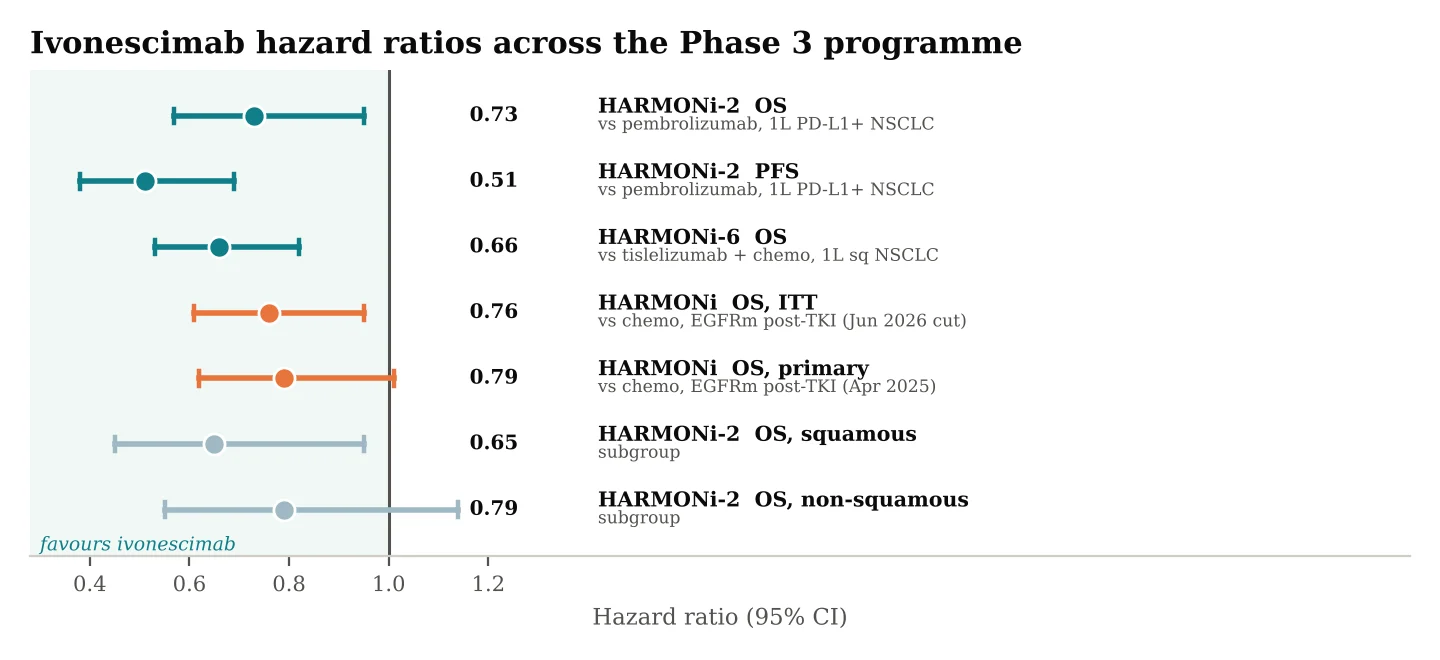
At the second prespecified interim analysis of overall survival, with 234 deaths at the 20 August 2026 cut-off and median follow-up of 36.0 months in 398 patients, median overall survival was 30.8 months with ivonescimab against 22.6 months with pembrolizumab, hazard ratio 0.73, 95% CI 0.57 to 0.95, p=0.009 [3, 23, 24]. That is a 27 percent reduction in the risk of death and an 8.2-month improvement in median survival [9].
The benefit was generally consistent across prespecified subgroups, with a hazard ratio of 0.65 in squamous histology and 0.79 in non-squamous [23].
HARMONi-6, against an anti-PD-1 plus chemotherapy
HARMONi-6 (NCT05840016) randomized 532 patients with previously untreated advanced squamous NSCLC in China to ivonescimab plus chemotherapy or tislelizumab plus chemotherapy. The interim PFS analysis had shown median PFS of 11.1 months against 6.9 months, p<0.0001 [25].
At the first planned overall survival analysis, presented in the ASCO 2026 plenary session and published simultaneously in The Lancet, median overall survival was 27.89 months against 23.69 months, a hazard ratio of 0.66, a 34 percent reduction in the risk of death [4, 20, 26]. Akeso and Summit describe this as the first regimen to achieve a statistically significant overall survival benefit over an anti-PD-(L)1 antibody combined with chemotherapy in a Phase 3 trial in NSCLC [27]. The benefit was consistent across PD-L1 expression strata [28].
HARMONi, the trial behind the BLA
HARMONi (NCT05184712) was the multiregional, double-blind, placebo-controlled Phase 3 in patients with EGFR-mutated non-squamous NSCLC who had progressed on a third-generation EGFR TKI. It enrolled in North America, Europe and China.
The trial met its primary PFS endpoint. The primary overall survival analysis in April 2025 gave a hazard ratio of 0.79, 95% CI 0.62 to 1.01, p=0.057, a positive trend that did not reach statistical significance [10]. An updated analysis with a June 2026 cut-off gave an OS hazard ratio of 0.76, 95% CI 0.61 to 0.95, nominal p=0.0151 in the global intention-to-treat population, with median overall survival of 16.8 months in the ivonescimab arm [11, 29]. Summit reported a 24 percent reduction in the risk of death without statistical significance and said the data had been shared with the FDA [19].
The November 2026 complete response letter
On 15 November 2026 Summit announced that the FDA had issued a complete response letter for ivonescimab plus platinum-containing chemotherapy in locally advanced or metastatic NSCLC after prior EGFR TKI therapy.
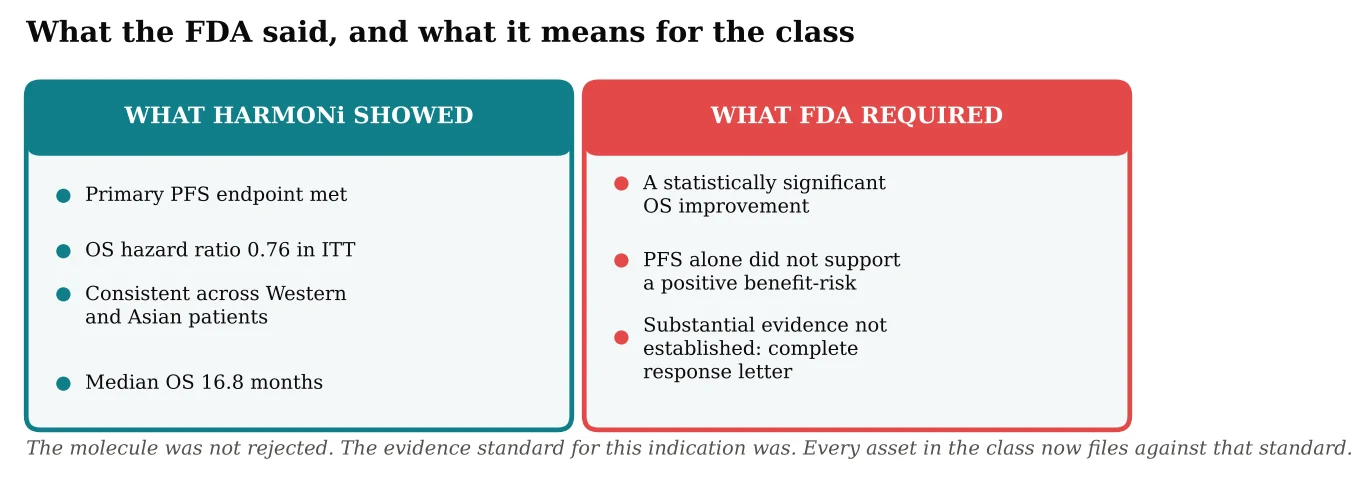
The Agency’s position, in Summit’s description, was that the BLA cannot be approved in its present form because substantial evidence of effectiveness is not established in the absence of a statistically significant overall survival improvement, and that a progression-free survival benefit without a statistically significant OS benefit does not support a positive benefit-risk profile [1, 2].
| What a licensor should take from this | Why |
| Power the trial for overall survival | A PFS-powered trial with OS as a secondary endpoint is a filing risk in any indication where OS is measurable, however strong the PFS hazard ratio |
| Check the control arm against current standard of care | Summit noted that no FDA-approved regimen in this setting has demonstrated a statistically significant OS benefit. A weak comparator does not lower the bar for the applicant |
| Treat an OS trend as a trend | A hazard ratio of 0.76 with a nominal p-value is a strong commercial signal and an insufficient regulatory one. Valuation models should separate the two |
| Read the scope of the letter precisely | The CRL applies to this BLA, not to the entire ivonescimab program [30]. HARMONi-3 and HARMONi-7 are unaffected as trials |
| Expect the standard to carry | Pumitamig, SSGJ-707 and RC148 will file into the same review environment, with the same expectation on overall survival |
The competing assets
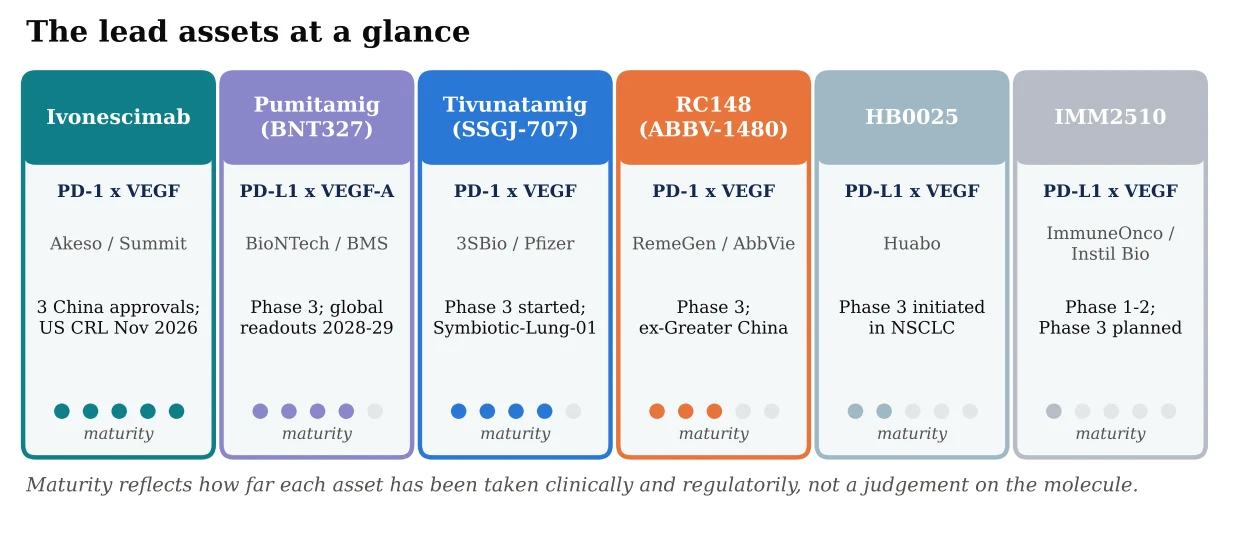
| Asset | Target and format | Originator and partner | Where it stands |
| Ivonescimab (SMT112, AK112) | PD-1 x VEGF, tetravalent bispecific | Akeso, China; Summit Therapeutics ex-China | Three NMPA approvals; US CRL November 2026; HARMONi-3 and HARMONi-7 ongoing [1, 5, 19] |
| Pumitamig (BNT327, PM8002, BMS-986545) | PD-L1 x VEGF-A, tetravalent bispecific | Biotheus, acquired by BioNTech; co-developed with BMS | Phase 3 in NSCLC, SCLC and TNBC; the only PD-L1-based molecule with a global Phase 3 against pembrolizumab [13, 14, 31] |
| Tivunatamig (SSGJ-707, PF-08634404) | PD-1 x VEGF, fully human IgG4 bispecific | Sunshine Guojian and 3SBio; Pfizer ex-China with a China option | Phase 3 Symbiotic-Lung-01 (NCT07222566) in first-line NSCLC regardless of PD-L1 [13, 32] |
| RC148 (ABBV-1480) | PD-1 x VEGF bispecific | RemeGen, China; AbbVie ex-Greater China | Phase 3 against tislelizumab plus chemotherapy; deal effective 10 March 2026 [14, 17] |
| HB0025 | PD-L1 x VEGF, fusion protein with a receptor-domain VEGF trap | Huabo Biopharm | Phase 2 data reported; Phase 3 initiated in squamous and non-squamous NSCLC [13] |
| IMM2510 (palverafusp alfa) | PD-L1 x VEGF, bispecific fusion protein | ImmuneOnco; Instil Bio | Phase 1 dose escalation reported; Phase 3 planned [13, 15] |
| SCTB14 | PD-1 x VEGF bispecific | SinoCellTech | Phase 2/3 in NSCLC [15] |
Ongoing Phase 2 and Phase 3 trials
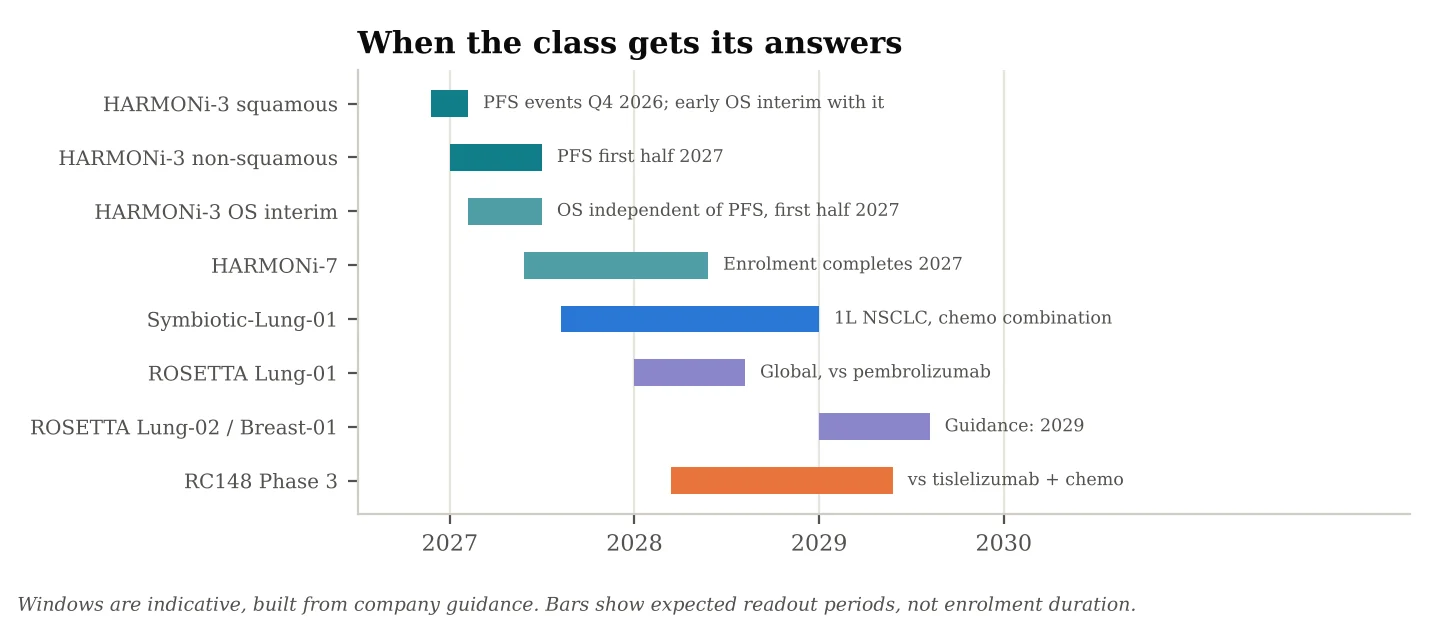
Phase 3 trials and when they read out
| Trial | Asset and design | Status |
| HARMONi-3 (NCT05899608) | Ivonescimab plus chemotherapy in first-line NSCLC, multiregional, analysed separately by histology | Enrolment complete in both cohorts. PFS events in the squamous cohort expected in Q4 2026, with an early OS interim alongside. An OS interim independent of PFS is planned for the first half of 2027 [33] |
| HARMONi-7 | Ivonescimab, global Phase 3 | Enrolling; enrolment expected to complete in 2027 [33] |
| HARMONi-GI3 | Ivonescimab plus chemotherapy in first-line unresectable metastatic colorectal cancer | Enrolling [34] |
| Symbiotic-Lung-01 (NCT07222566) | SSGJ-707 plus platinum chemotherapy in first-line NSCLC regardless of PD-L1 expression | Initiated [32] |
| ROSETTA Lung-01 and Lung-02 | Pumitamig, global Phase 2/3 programme including comparison against pembrolizumab | Phase 3 underway. BioNTech guidance points to a China first-line TNBC Phase 3 readout in 2026, global Lung-01 in 2028, and Lung-02 and Breast-01 in 2029 [14, 32] |
| RC148 Phase 3 | RC148 against tislelizumab plus chemotherapy | Phase 3 [14] |
Phase 2 activity presented at ASCO 2026

In the global Phase 2 portion of ROSETTA Lung-02 (NCT06712316), 44 patients with no actionable genomic alterations were randomized to pumitamig at 1400 mg or 2000 mg with histology-specific chemotherapy. Among 40 response-evaluable patients the confirmed objective response rate was 52.5 percent, with a disease control rate of 100 percent; confirmed ORR was 57.1 percent in non-squamous and 68.4 percent in squamous disease, and at the selected 1500 mg dose, 63.6 percent in non-squamous and 72.7 percent in squamous [35, 36, 37].
SSGJ-707 plus chemotherapy reported a 67.6 percent ORR and median progression-free survival of 12.4 months in first-line NSCLC with PD-L1 TPS of 1 percent or more. As monotherapy in first-line PD-L1-positive NSCLC, confirmed ORR was 23 of 34 patients at a median follow-up of 15.2 months [13, 38].
Reading cross-trial response rates
These are different trials, different populations, different dose levels and in some cases different definitions of confirmed response. A 72.7 percent ORR in one Phase 2 and a 67.6 percent in another is not a ranking. Until there is a head-to-head, the only honest comparison is of trial design and of the populations enrolled.
Safety and the class signal
Adding VEGF blockade to checkpoint inhibition brings the toxicities of both, and the VEGF-driven events are the ones that distinguish this class from an anti-PD-1 alone.
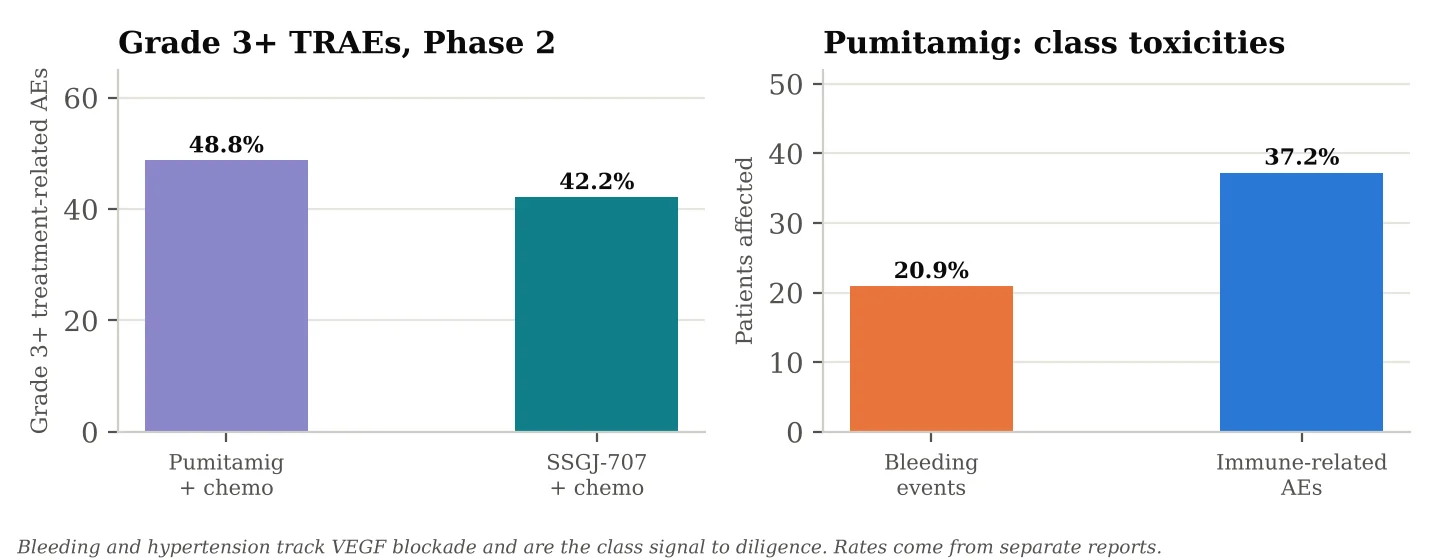
At ASCO 2026, grade 3 or higher treatment-related adverse events were reported in 48.8 percent of pumitamig patients and 42.2 percent of SSGJ-707 patients. Pumitamig showed bleeding events in 20.9 percent and immune-related adverse events in 37.2 percent [38, 39].
| Signal | What to diligence |
| Bleeding and haemorrhage | The defining VEGF-class risk. Check histology mix, central airway involvement, anticoagulation exclusions, and whether squamous patients were enrolled in the dose-finding population |
| Hypertension and proteinuria | Expected with VEGF blockade; manageable but a dose-modification driver that affects real-world exposure |
| Immune-related adverse events | The claim of a lower irAE burden than separate agents is a class hypothesis. Look for the comparison that supports it in the specific asset’s dataset |
| Dose still being optimized | Pumitamig’s Phase 2 was a dose-optimization study. An asset licensed before dose selection carries both the upside and the risk of that decision |
Comparing the lead assets
There is no head-to-head trial in this class and there will not be one. Comparison has to be structural: what each asset has proven, where it can be sold, and what it would take to finish it.
| Ivonescimab | Pumitamig | SSGJ-707 | RC148 | |
| Target | PD-1 x VEGF | PD-L1 x VEGF-A | PD-1 x VEGF | PD-1 x VEGF |
| Phase 3 OS data | Yes, two positive trials | Not yet | Not yet | Not yet |
| Approvals | Three in China | None | None | None |
| US regulatory status | CRL, November 2026 | Phase 3 | Phase 3 | Phase 3 |
| Ex-China partner | Summit | BMS | Pfizer | AbbVie |
| Available territory | Largely committed | Largely committed | China option open | Greater China retained |
| Next catalyst | HARMONi-3 squamous PFS and OS interim | ROSETTA Lung-01, 2028 | Symbiotic-Lung-01 | Phase 3 readout |
The practical consequence for a buyer arriving now is that the four most advanced assets are spoken for. What remains available is the second tier, the China rights that some originators retained, and indications outside lung that none of the leaders have locked down.
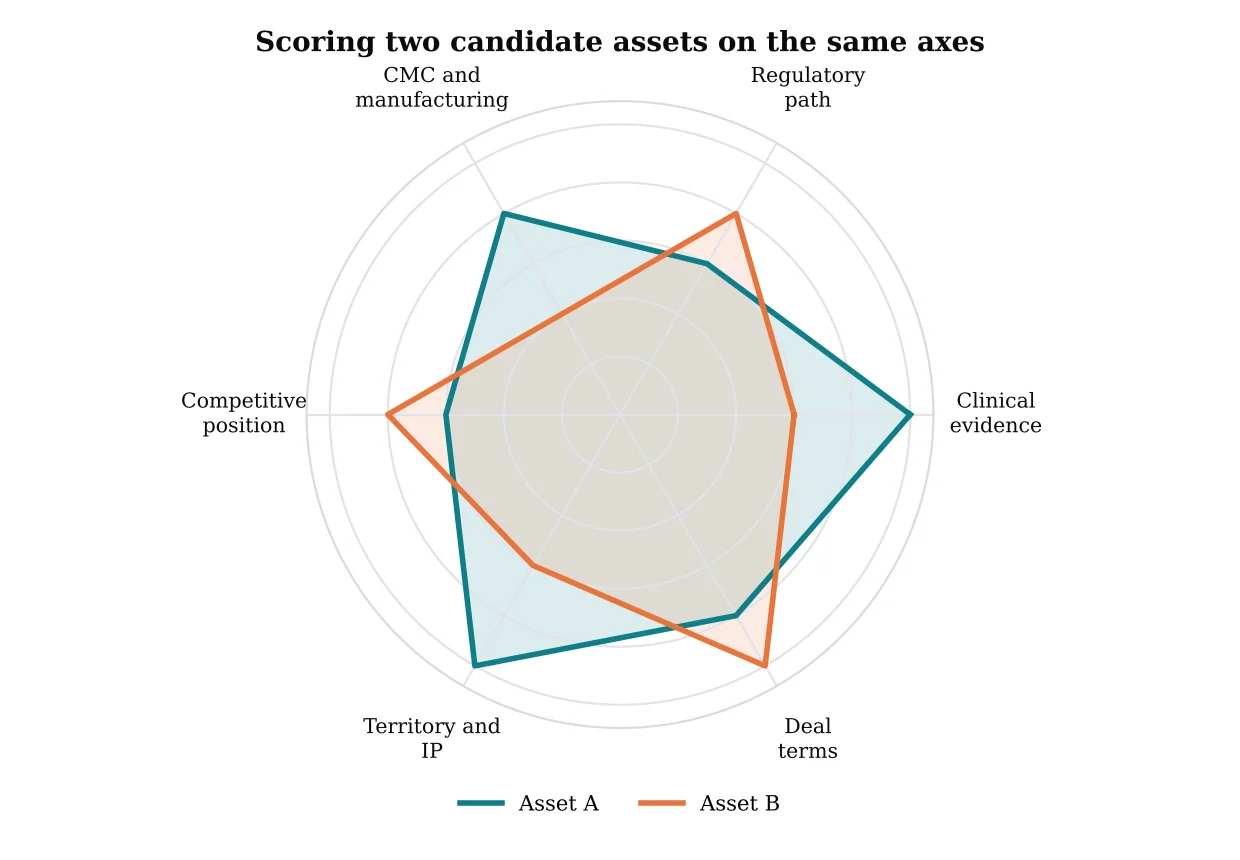
| Axis | What a high score means |
| Clinical evidence | Randomized data with a survival endpoint, in a population the buyer intends to sell into |
| Regulatory path | A defined route to approval in the buyer’s territory, with the OS standard in section 6 accounted for |
| CMC and manufacturing | A transferable process with a credible cost of goods and no single-territory dependency |
| Competitive position | A differentiated indication or line of therapy, not a fifth entrant into first-line NSCLC |
| Territory and IP | Clean, broad rights with a freedom-to-operate opinion that survives scrutiny |
| Deal terms | Upfront proportionate to the evidence, with milestones tied to the readouts that de-risk the asset |
EllyCell’s diligence capability
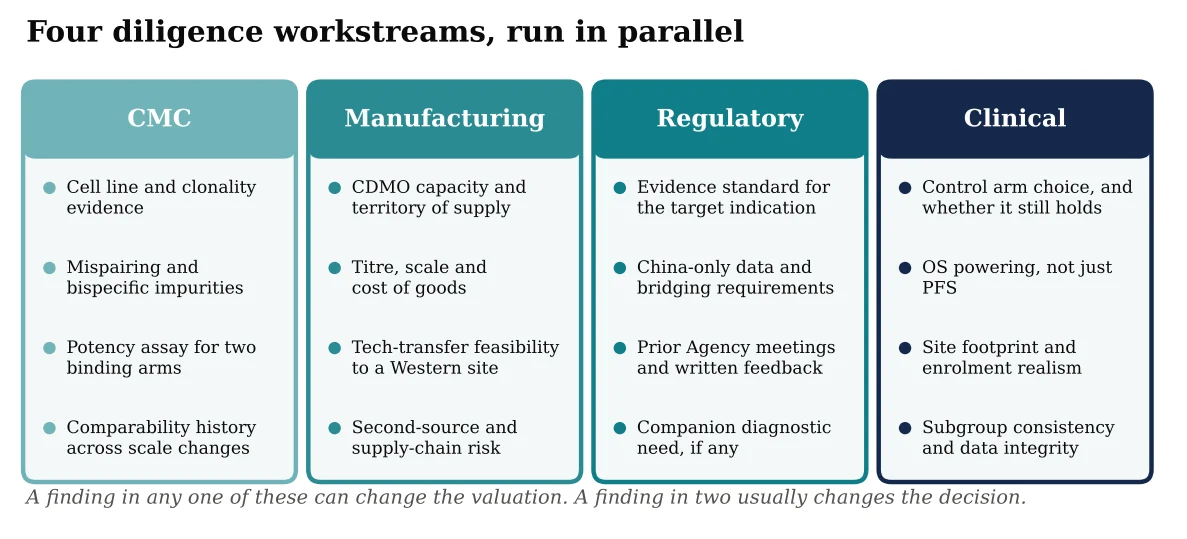
EllyCell runs technical diligence on oncology assets for both sides of a transaction. For a bispecific in this class, four workstreams run in parallel, and findings in any of them feed directly into valuation.
| Workstream | What we examine | The question it answers |
| CMC | Cell line history and clonality evidence, bispecific-specific impurities including mispairing and half-antibody species, potency assays that must measure two binding arms and their cooperativity, comparability history across every scale and site change | Can this process be filed and defended, and what will it cost to fix if not? |
| Manufacturing | CDMO capacity and where it sits, titer and cost of goods, tech-transfer feasibility to a Western site, second-source strategy, and supply-chain exposure to a single territory | Can the buyer actually supply its own market, and on what timeline? |
| Regulatory | The evidence standard in the target indication, bridging requirements for China-generated data, the full record of prior Agency interactions and written feedback, and any companion diagnostic obligation | What does approval in the buyer’s territory actually require? |
| Clinical design and operations | Control arm choice and whether it still reflects standard of care, OS powering rather than PFS powering, site footprint and enrolment realism, subgroup consistency, and data integrity at the site level | Will the next trial produce a result a regulator will accept? |
What the team brings
| Area | EllyCell capability |
| CMC and manufacturing | Drug substance and drug product process development, assay development and qualification, cGMP and GLP audit of contract organizations, CAPA, and process characterization and performance qualification |
| Regulatory | Pre-IND and briefing-package strategy, Module 3 authoring and review, and former FDA preclinical review experience through David Hawver, who spent more than 22 years at the Agency and handled over 500 IND cases |
| Clinical design and operations | Protocol and endpoint review, comparator strategy, site and enrolment feasibility, and translational and biomarker planning |
| Licensing and BD | Landscape and competitor analysis, asset evaluation, data-room assessment, investment-package readiness, rNPV modelling and deal structuring |
How EllyCell helps
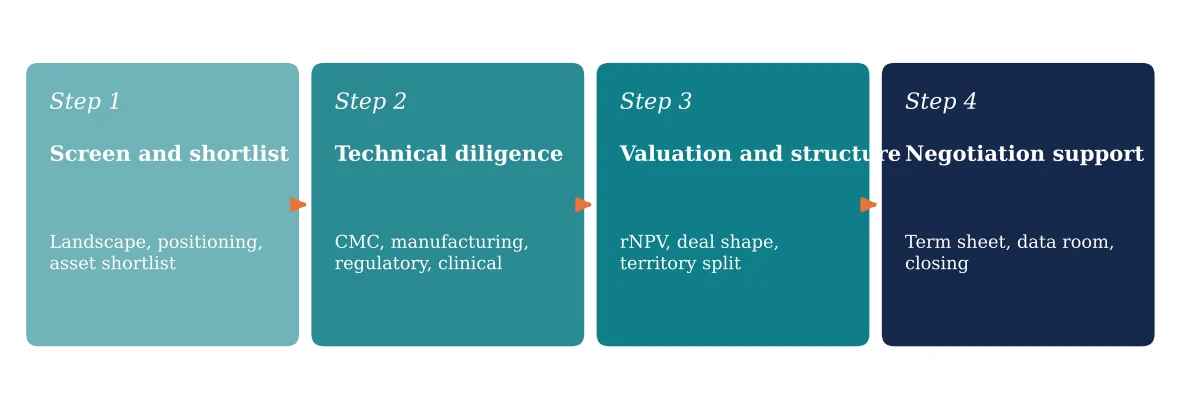
Whether you are an originator seeking a partner or a buyer evaluating an asset, the work runs in the same four steps.
| Step | What you get |
| Screen and shortlist | A current landscape of the class, honest positioning of your asset or of the targets against it, and a ranked shortlist with the reasoning behind the ranking |
| Technical diligence | CMC, manufacturing, regulatory and clinical workstreams run in parallel, each producing findings with a cost and a timeline attached rather than a list of observations |
| Valuation and structure | Risk-adjusted NPV built on the real probability of success given the evidence standard, with license against NewCo structures modelled on the specific asset |
| Negotiation support | Term-sheet strategy, territory and reversion terms, data-room preparation for a seller or response handling for a buyer, through to closing |
Start a conversation
If you are evaluating an asset in this class, send us the data package and the territory you care about. We will tell you what it would take to finish the asset and what the November 2026 standard means for its filing.
EllyCell, LLC, McLean, Virginia, USA https://ellycell.com, info@ellycell.com
References
[1] Summit Therapeutics, “Summit Therapeutics provides update regarding ivonescimab biologics license application,” 15 November 2026.
[2] CancerNetwork, “FDA provides CRL to ivonescimab/chemotherapy for pretreated EGFR+ NSCLC,” November 2026.
[3] IASLC, “Late-breaking HARMONi-2 analysis shows ivonescimab significantly improves overall survival versus pembrolizumab in PD-L1-positive advanced NSCLC,” 12 September 2026.
[4] ASCO Daily News, “HARMONi-6: ivonescimab plus chemo improves OS versus tislelizumab plus chemo in previously untreated advanced squamous NSCLC” (LBA4), 2026 ASCO Annual Meeting.
[5] Summit Therapeutics / Business Wire, “Ivonescimab in combination with chemotherapy approved in China by NMPA for first-line treatment of patients with squamous non-small cell lung cancer,” 12 August 2026.
[6] Pharmaceutical Technology, “Akeso secures China NMPA authorisation for ivonescimab combo,” 13 August 2026.
[7] Vision Life Sciences, “PD-1/VEGF bispecific antibody landscape 2026,” 2026.
[8] Noah Bio, “Bispecific antibody deal-making, 2019 to 2026: targets, platforms, and competitive differentiation.”
[9] The ASCO Post, “Ivonescimab significantly improves overall survival vs pembrolizumab in PD-L1-positive advanced NSCLC,” September 2026.
[10] Summit Therapeutics, “Updated HARMONi data presented at WCLC 2026 demonstrate consistent overall survival results with ivonescimab plus chemotherapy in Western and Asian patients,” 15 September 2026.
[11] MedPath, “Updated HARMONi data at WCLC 2026 show durable overall survival benefit for ivonescimab in EGFR-mutated NSCLC,” 2026.
[12] Rini BI, Garmezy B. Podcast on the emerging role of PD-(L)1/VEGF bispecific antibodies in the evolving advanced renal cell carcinoma treatment landscape. Oncology and Therapy, 2026.
[13] PD-(L)1 x VEGF bispecific antibodies in solid tumors: clinical trial updates from ASCO 2026. PMC13723926.
[14] BioPharma APAC, “The PD-(L)1 x VEGF bispecific race: every APAC programme in the clinic, counted,” 2026.
[15] Antibody Therapeutics, “Ivonescimab and other anti-PD-(L)1/VEGF bispecific antibodies: progress and prospects in cancer therapy,” 9(2):191.
[16] TONACEA, “Where lies the next BD opportunity amid the fiercely competitive PD-1/VEGF landscape?” 2026.
[17] BioPharma APAC, RC148 licensing terms: US$650 million upfront, up to US$4.95 billion in milestones, tiered royalties, January 2026, effective 10 March 2026.
[18] BioNTech, acquisition of Biotheus, closing February 2025.
[19] FiercePharma, “Summit Therapeutics updates ivonescimab survival data ahead of FDA decision date,” 2026.
[20] OncoDaily, “HARMONi-6 trial at ASCO plenary 2026,” 2026; results published simultaneously in The Lancet.
[21] Akeso, Inc., corporate update, 28 August 2026.
[22] BioPharm International, “China grants ivonescimab priority review in biliary tract cancer,” 4 November 2026.
[23] Xiong et al., HARMONi-2 primary analysis, The Lancet; OS analysis presented at WCLC 2026.
[24] Summit Therapeutics, Form 8-K, September 2026, HARMONi-2 overall survival disclosure.
[25] Summit Therapeutics, HARMONi-6 ASCO 2026 presentation materials, NCT05840016.
[26] Oncology News Central, “Ivonescimab improves survival in advanced squamous NSCLC, with caveats,” 2026.
[27] Akeso, Inc., NMPA sNDA approval announcement for first-line squamous NSCLC, 12 August 2026.
[28] HARMONi-6 ASCO 2026 subgroup analysis by PD-L1 expression level.
[29] Summit Therapeutics, second quarter 2026 earnings release, July 2026.
[30] Panabee, “FDA issues CRL for Summit’s ivonescimab over lack of significant overall-survival benefit,” November 2026.
[31] OncLive, “Pumitamig plus chemo demonstrates encouraging efficacy in frontline NSCLC,” 2026.
[32] NovaPharma News, “ASCO 2026: VEGF bispecific data from BioNTech, BMS, Pfizer, 3SBio,” 2026.
[33] Summit Therapeutics, third quarter 2026 financial results and operational progress, 5 November 2026.
[34] Summit Therapeutics, first quarter 2026 financial results, 30 April 2026.
[35] Targeted Oncology, “ASCO 2026 lung cancer data highlight advances across targeted agents and immunotherapy,” 2026.
[36] DelveInsight, “Pumitamig showed encouraging efficacy in ROSETTA Lung-02 in NSCLC,” 2026.
[37] BioNTech and Bristol Myers Squibb, interim Phase 2 ROSETTA Lung-02 data, 30 May 2026; ASCO 2026 abstract 8513.
[38] ASCO 2026 abstract 8514, SSGJ-707 in first-line NSCLC.
[39] BioNTech SE, Form 6-K, interim Phase 2 ROSETTA Lung-02 safety data, 2026.